



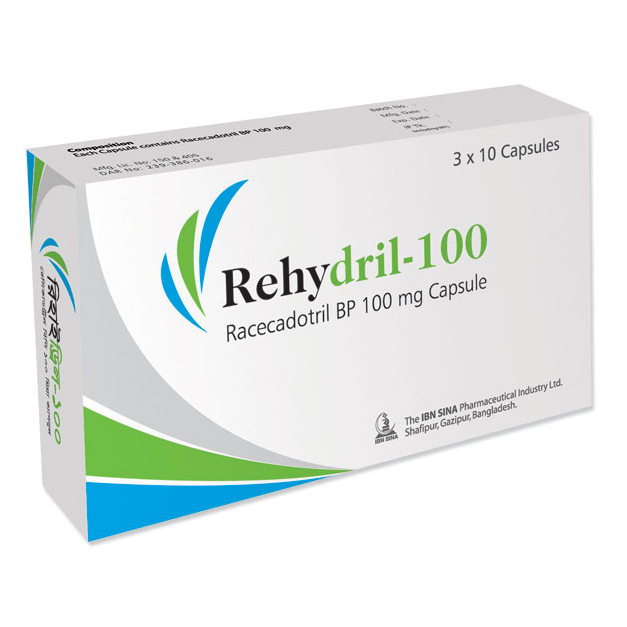

Introduction
Rehydril is used in the treatment of symptoms of acute diarrhea. It should be used along with abundant liquid intake and dietary measures. This medicine is used when fluid and dietary measures are not sufficiently effective to control diarrhea. Rehydril is taken with food in a dose and duration as advised by the doctor. It is either in tablet form or used as sachet. It is important to take this medicine along with oral rehydration solution (ORS) to provide adequate fluid and electrolyte replacement. The dose you are given will depend on your condition and how you respond to the medicine. You should take this medicine until your doctor tells you to stop. Let your doctor know about all other medications you are taking as some may affect, or be affected by this medicine. The most common side effects are vomiting and fever. Most of these are temporary and usually resolve with time. Contact your doctor straight away if you are at all concerned about any of these side effects. Rehydril should not be used in children if they have blood or pus in stools, chronic diarrhea, diarrhea caused by antibiotics, and suffering from kidney or liver disease. It also not used in children under three months of age. Pregnant or breastfeeding women should also consult their doctor.
_
Uses of Rehydril
Diarrhea
Side effects of Rehydril
Common
Vomiting
Fever
How to use Rehydril
Take this medicine in the dose and duration as advised by your doctor. Do not chew, crush or break it. Rehydril is to be taken with food.
How Rehydril works
Rehydril has an anti-secretory effect. It reduces the secretion of water and electrolytes from the intestine. This helps to reduce the amount of fluid loss from the body in diarrhoea.
What if you forget to take Rehydril?
If you miss a dose of Rehydril, skip it and continue with your normal schedule. Do not double the dose.
Quick Tips
Rehydril should be used together with an oral rehydration solution (ORS) to provide adequate fluid and electrolyte replacement.
Don’t use Rehydril, if you have blood and pus in the stools or fever. This may be due to bacterial infection and may need different treatment.
Not recommended to be taken more than 7 days.
Inform your doctor if you have ever been diagnosed with kidney or liver problems.
Don’t use Rehydril, if you have uncontrolled vomiting.
Don’t use Rehydril in children less than 3 months.
Rehydril sachet should be taken orally, directly or mixed with water. Make sure it is mixed well, and then give the total dose immediately to your child.
Brief Description
Indication
Acute diarrhoea
Administration
May be taken with or without food.
Adult Dose
Oral Acute diarrhoea Adult: 100 mg tid. Continue treatment until 2 normal stools are recorded. Max duration: 7 days.
_
Child Dose
Oral Acute diarrhoea Child: 3 mth to 17 yr <9 kg: 10 mg tid; 9 to <13 kg: 20 mg tid; 13-27 kg: 30 mg tid; >27 kg: 60 mg tid. Continue treatment until 2 normal stools are recorded. Max duration: 7 days.
_
Contraindication
Hypersensitivity to Racecadotril, or to any of the excipients.
Mode of Action
Racecadotril increases the availability of endogenous opioids (enkephalins) by inhibiting the membrane-bound enkephalinase. These enkephalins activate delta-opioid receptors in the GI tract. This leads to a reduction in cAMP mucosal levels, resulting in a reducted secretion of water and electrolytes in the intestinal lumen.
Precaution
Chronic & antibiotic-associated diarrhoea, bloddy or purulent stools & fever, patients w/ diabetes, renal or liver impairment, cases of prolonged or uncontrolled vomiting. Pregnancy, lactation.
_
Side Effect
Headache, tonsillitis, rash, erythema multiforme or nodosum; tongue, face, lip or eyelid oedema; angioedema, urticaria, prurigo, pruritus.



Reviews
Clear filtersThere are no reviews yet.