



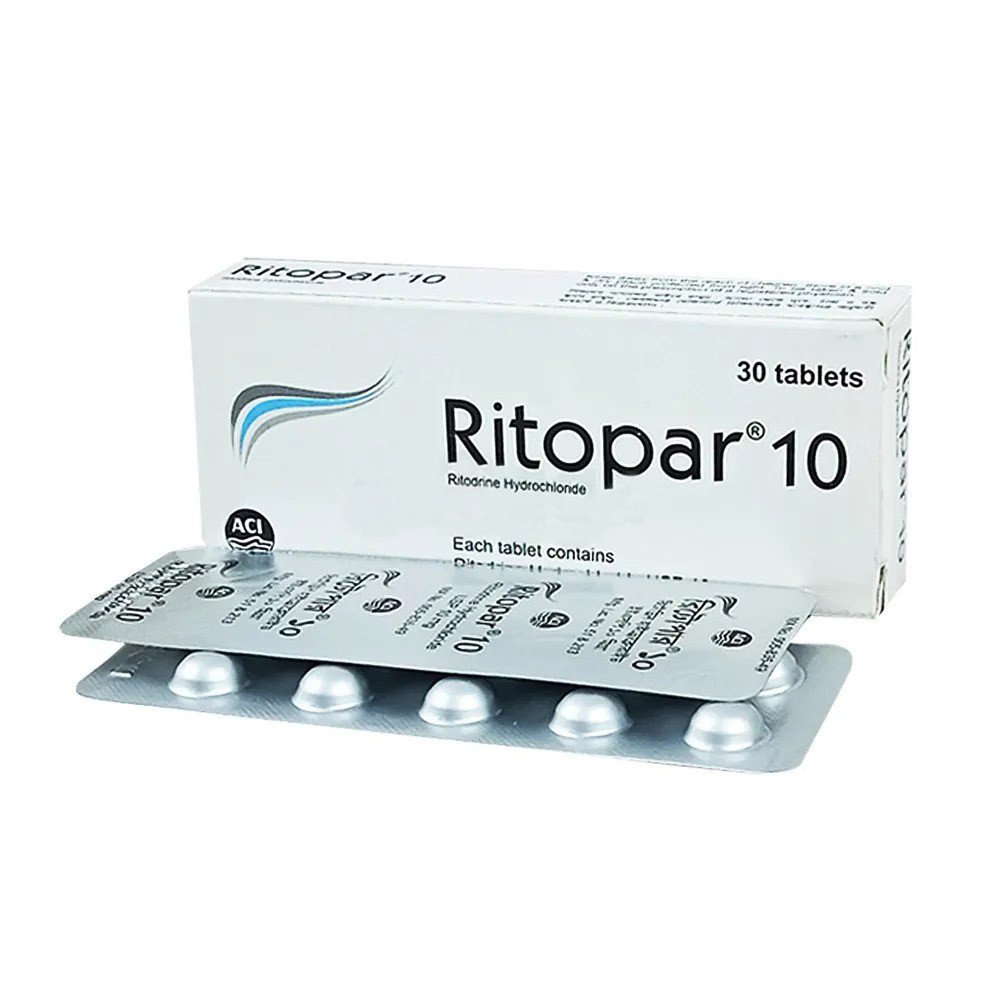

Medicine Overview of Ritopar 10mg Tablet
Ritopar 10 is vasodilators and uterine relaxants. It is used in the treatment of premature labor (when the uterus starts contracting for birth too early than usual). It works on the muscles of the uterus and helps in relieving the contractions.
Ritopar 10 can be taken with or without food, but take it at the same time to get the most benefit. It should be taken as your doctor’s advice. The dose and how often you take it depends on what you are taking it for. Your doctor will decide how much you need to improve your symptoms. Swallow the tablets whole with a drink of water. You should take this medicine for as long as it is prescribed for you.
The most common side effects of this medicine include chest pain or discomfort, fast or irregular heartbeat, dizziness, drowsiness, dry mouth and loss of appetite. If these bother you or appear serious, let your doctor know. There may be ways of reducing or preventing them.
Before taking the medicine, tell your doctor if you have ever had diabetes, blood pressure, or thyroid. Your doctor should also know about all other medicines you are taking as many of these may make this medicine less effective or change the way it works. Tell your doctor if you are breastfeeding or if you experience contraction and water break. Your doctor may perform blood pressure and heart rate check-ups while taking this medicine.
Show less
- Premature Labor
- Breathlessness
- Chest discomfort
- Increased glucose level in blood
- Increased heart rate
- Palpitations
- Tremor
-
Ritopar 10 is used in the management of premature labour.
-
Avoid over-hydration while taking this medicine.
-
Regularly monitor your blood pressure and pulse rate while on treatment with this medicine.
-
Inform your doctor if you suffer from high blood pressure, diabetes, or thyroid disorders.
-
Inform your doctor immediately if your contractions begin again or your water breaks.
Oral
Uncomplicated premature labour
Adult: Start oral therapy 30-60 mins before termination of IV infusion at 10 mg every 2 hr for 24 hr. Subsequently, 10-20 mg every 4-6 hr according to patient’s response. Max oral dose 120 mg daily.
Parenteral
Uncomplicated premature labour
Adult: Given as IV infusion, initially 0.05 mg/min. Increase by 0.05 mg/min every 10 min until patient responds. Usual rate: 0.15-0.35 mg/min. As IM inj: 10 mg every 3-8 hr. Maintain for 12-48 hr after the contractions have stopped.
Show less
The common side-effects of ritodrine hydrochloride are nausea, vomiting, flushing, sweating, tremor, hypokalaemia, tachycardia, palpitations, hypotension (left lateral position throughout infusion to minimize risk), uterine bleeding, pulmonary oedema; chest pain or tightness, arrhythmias and salivary gland enlargement. On prolonged administration for several weeks may cause leucopenia and agranulocytosis; liver function abnormalities including increased transaminases and hepatitis.
Potentially Fatal: Rarely, anaphylaxis, arrhythmia, pulmonary oedema, hypokalaemia.
Show less
May enhance neuromuscular blockade produced by pancuronium and vecuronium.
Potentially Fatal: Potassium-depleting drugs may increase risk of hypokalaemia.
Show less


Reviews
Clear filtersThere are no reviews yet.