



Introduction
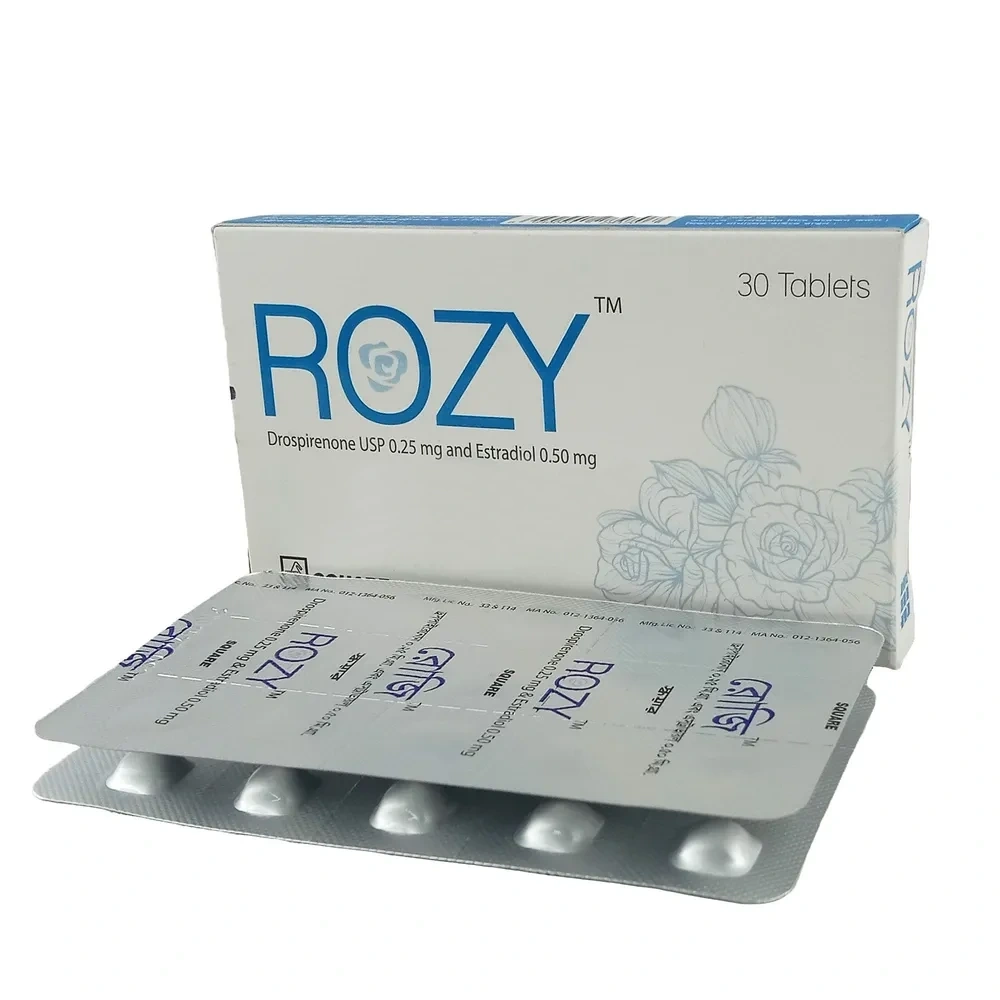
Rozy is a combination of two medicines used for contraception (to prevent pregnancy) and in the treatment of irregular periods. It helps to prevent release and fertilization of the egg. Rozy can be taken with or without food, but take it at the same time to get the most benefit. It should be taken as your doctor’s advice. You should have to start taking the pill on the day one of your menstrual cycle and continue taking it for whole month and start with new pack once the pack get finished. If you experience vomiting with in 4 hours of dose intake, take another tablet. You body may take 7 days to get adjust with medicine, hence use condom during first week to avoid pregnancy. In case you missed your dose and you are late by 12 hours in taking the missed dose, in that case must use a condom while intercourse for a period of 2 days. Nausea, headache, breast pain, and weight gain are some commonly seen side effects of this medicine. If these bother you, or appear serious, let your doctor know. There may be ways of reducing or preventing them. You might experience spotting or bleeding between menstrual periods or missed periods. Consult with your doctor if this occurs frequently or persists longer. Inform your doctor if you notice swelling and pain in your limbs, shortness of breath, chest pain or changes in vision, as it may be a sign of blood clot. Before taking this medicine, let your doctor know if you smoke and are over 35, or if you have ever had a heart attack or have cancer of uterus/cervix, or vagina. Your doctor should also know about all other medicines you are taking as many of these may make this medicine less effective or change the way it works. Do not take the medicine if you are pregnant already or breastfeeding. You might be asked for regular check-up of blood pressure, cholesterol and blood sugar level while on treatment.
_
Uses of Rozy
Contraception
Side effects of Rozy
Common
Nausea
Stomach pain
Headache
Weight gain
Breast pain
Irregular uterine bleeding
How to use Rozy
Take this medicine in the dose and duration as advised by your doctor. Swallow it as a whole. Do not chew, crush or break it. Rozy may be taken with or without food, but it is better to take it at a fixed time.
How Rozy works
Rozy is a combined oral contraceptive pill. It works by preventing the release of egg (ovulation) and affecting sperm movement in the womb to prevent its union with the egg. It also changes the lining of the womb and renders it unsuitable for pregnancy.
Quick Tips
Your doctor has prescribed Rozy to help you prevent pregnancy.
It also results in lighter, less painful and more regular menstrual bleeding.
It may help reduce the risk of ovarian cancer.
Take your pill at the same time every day to help you remember to take it.
You may experience menstrual irregularities such as spotting or bleeding between menstrual periods or missed periods. Consult your doctor if this persists.
Do not use Rozy if you are obese, over 35, smoke, on prolonged bed rest, or have a history of blood clots.
Stop taking this medicine and inform your doctor immediately if you notice unexplained swelling and pain in your limbs, shortness of breath, chest pain, severe headache, or changes in vision. These could be symptoms of a blood clot in a vein.
Stop taking Rozy and inform your doctor immediately if you notice your skin and whites of the eye turning yellow (jaundice), severe stomach pain, severe depression or if you think you could be pregnant.
Brief Description
Indication
Hormone replacement therapy (HRT), Climacteric syndrome in postmenopausal women including vasomotor symptoms (such as hot flushes and sweating attacks), sleep disorders, depressed moods, nervousness and atrophic, urogenital conditions caused by deficient endogenous estrogen production due to natural menopause, hypogonadism, castration or primary ovarian failure in women with an intact uterus, Prevention of postmenopausal osteoporosis
_
Administration
Each pack covers 28 days of treatment. Treatment is continuous, which means that the next pack follows immediately without a break. The tablets are to be swallowed whole with some liquid irrespective of food intake. The tablets should preferably be taken at the same time every day. For treatment of postmenopausal symptoms, the lowest effective dose should be used. For initiation and continuation of treatment of postmenopausal symptoms, the lowest effective dose for the shortest duration should be used.
_
Adult Dose
Hormone Replacement Therapy Oral Tablet 1 tablet PO daily Hepatic impairment In women with mild or moderate hepatic impairment, DRSP is well tolerated. It is contraindicated in women with severe hepatic disease
_
Renal Dose
Renal Impairment In women with mild or moderate renal impairment, a slight increase of Drug Resistant Streptococcus Pneumoniae exposure was observed but is not expected to be of clinical relevance. It is contraindicated in women with severe renal disease.
_
Contraindication
Hormone replacement therapy (HRT) should not be started in the presence of any of the conditions listed below. The product should be stopped immediately, if any of the conditions appear during HRT use. Undiagnosed abnormal genital bleeding Known or suspected cancer of the breast Known or suspected premalignant conditions or malignancies, if sex steroid-influenced The excess risk disappears within a few years after stopping HRT. Endometrial cancer Prolonged exposure to unopposed estrogens increases the risk of development of endometrial hyperplasia or carcinoma. The addition of DRSP opposes the development of endometrial hyperplasia caused by estrogens. Liver tumors In rare cases benign, and even more rarely, malignant liver tumors have been observed after the use of hormonal substances such as those contained in HRT products. In isolated cases, these tumors led to life-threatening intra-abdominal hemorrhage.
_
Mode of Action
Estradiol: Endogenous estrogen; reduces the release of gonadotropin-releasing hormone from hypothalamus, reduces release of luteinizing hormone (LH) and follicle stimulating hormone (FSH) from pituitary gland; increases synthesis of DNA, RNA, and various proteins in target tissues. Estrogen replacement reduces elevated levels of estrogen and progesterone LH and FSH in postmenopausal women Drospirenone: Progestin; spironolactone analog with antimineralocorticoid and antiandrogenic activity
_
Precaution
Before initiating therapy, all conditions/risk factors mentioned below should be considered when determining the individual benefit/risk of treatment for the patient. During HRT use, therapy should be discontinued immediately in case a contraindication is discovered, as well as in the following situations: 1. Migrainous or frequent and unusually severe headaches that occur for the first time or other symptoms that are possible prodromal of cerebrovascular occlusion. 2. Recurrence of cholestatic jaundice or cholestatic pruritus which occurred first during pregnancy or previous use of sex steroids. 3. Symptoms of a thrombotic event. In the event of new onset or deterioration of the following conditions or risk factors, the individual benefit/risk analysis should be re-done, taking into consideration the possible necessity of discontinuing therapy. The potential for an increased synergistic risk of thrombosis should be considered in women who possess a combination of risk factors or exhibit a greater severity of an individual risk factor. This increased risk may be greater than a simple cumulative risk of the factors. HRT should not be prescribed in case of a negative risk benefit assessment.
_
Side Effect
>10% Breast pain (19%) Upper respiratory infection (19%) Abdominal pain (11%) 1-10% Edema Peripheral edema Headache Accidental injury, back pain, pain in extremity Endometrial disorder Leukorrhea Vaginal hemorrhage Abdominal enlargement Flu syndrome Sinusitis
_
Pregnancy Category Note
Pregnancy Category: contraindicated in pregnancy Lactation: enters breast milk/not recommended
_
Interaction
Pharmacodynamic interaction with antihypertensive medications and non-steroidal anti-inflammatory drugs (NSAID) Hypertensive women treated with this combination drugs and anti-hypertensive medications, e.g. ACE inhibitors, angiotensin II receptor antagonists, and hydrochlorothiazide may experience an additional decrease in blood pressure. Combined use of this and NSAIDs or antihypertensive medications is unlikely to increase serum potassium. Concomitant use of these three types of medications together may cause a small increase in serum potassium, more pronounced in diabetic women.
_


Reviews
Clear filtersThere are no reviews yet.