


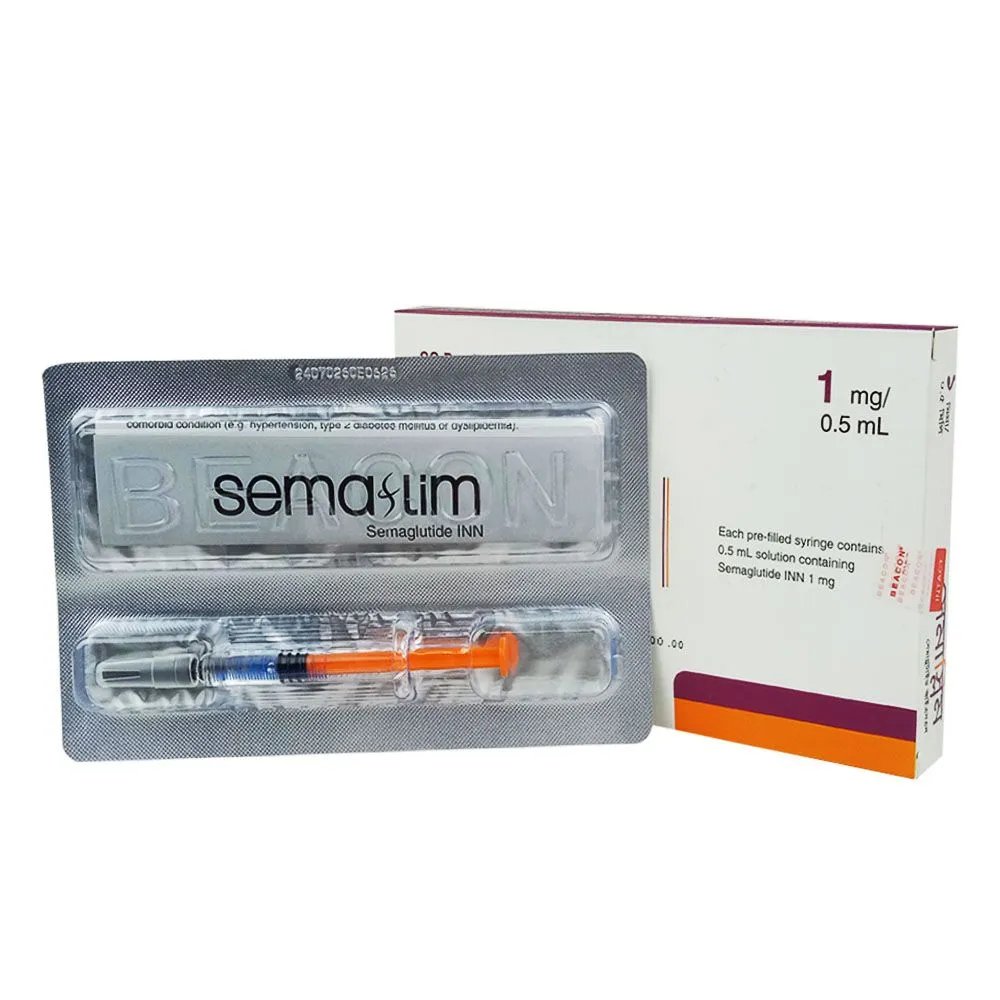

Medicine Overview of Semaslim 1mg injection
SC Administration
Administer SC to abdomen, thigh, or upper arm
Administer once weekly, on the same day each week, at any time of the day, with or without meals
Day of weekly administration can be changed if necessary as long as the time between 2 doses is at least 2 days (>48 hours)
Use a different injection site each week when injecting in the same body region
Type 2 Diabetes Mellitus
Indicated as an adjunct to diet and exercise to improve glycemic control in adults with type 2 diabetes mellitus
0.25 mg SC qWeek for 4 weeks initially; THEN increase the dosage to 0.5 mg qWeek
If glycemic control not achieved after at least 4 weeks on 0.5-mg dose, can increase to 1 mg qWeek
Hepatic impairment
No dosage adjustment required
<18 years: Safety and efficacy not established
Renal impairment
No dosage adjustment required
Personal or family history of MTC or in patients with multiple endocrine neoplasia syndrome type 2 (MEN 2)
Known hypersensitivity to semaglutide or to any of the product components
Glucagon-like peptide-1 (GLP-1) agonist
Incretins, such as GLP-1, enhance glucose-dependent insulin secretion by pancreatic beta-cells, suppresses inappropriately elevated glucagon secretion, and slows gastric emptying
Based on findings in rats and mice, semaglutide may cause thyroid C-cell tumors including MTC, in humans as human relevance of semaglutide-induced rodent thyroid C-cell tumors has not been determined (see Black Box Warnings)
In control trials, acute pancreatitis was confirmed by adjudication in 7 semaglutide-treated patients (0.3 cases per 100 patient years); one case of chronic pancreatitis was confirmed in an semaglutide-treated patient; after initiating treatment, monitor for signs and symptoms of pancreatitis (eg, persistent severe abdominal pain, sometimes radiating to the back and which may or may not be accompanied by vomiting)
Patients with a history of diabetic retinopathy may have an increased risk for diabetic retinopathy complications; rapid improvement in glucose control has been associated with a temporary worsening of diabetic retinopathy
Semaglutide pens must never be shared between patients, even if the needle is changed; pen-sharing poses a risk for transmission of blood-borne pathogens
Postmarketing reports describe acute kidney injury and worsening of chronic renal failure, which may sometimes require hemodialysis, in patients treated with GLP-1 receptor agonists; a majority of reported events occurred in patients who had experienced nausea, vomiting, diarrhea, or dehydration; monitor renal function when initiating or escalating doses of semaglutide in patients reporting severe adverse gastrointestinal reactions
>10%
Nausea (15.8-20.3%)
Documented symptomatic hypoglycemia, adjunctive therapy [≤70 mg/dL glucose threshold] (16.7-29.8%)
Severe or symptomatic hypoglycemia, adjunctive therapy [≤56 mg/dL glucose threshold] ( 8.3-10.7%)
1-10%
Vomiting (5-9.2%)
Diarrhea (8.5-8.8%)
Abdominal pain (5.7-7.3%)
Constipation (3.1-5%)
Dyspepsia (2.7-3.5%)
Eructation (1.1-2.7%)
Documented symptomatic hypoglycemia, monotherapy [≤70 mg/dL glucose threshold] (1.6-3.8%)
Flatulence (0.4-1.5%)
Gastroesophageal reflux disease (1.5-1.9%)
<1%
Gastritis (0.4-0.8%)
Cholelithiasis (0.4%)
Fatigue (>0.4%)
Dysgeusia (>0.4%)
Dizziness (>0.4%)
Injection site reaction (0.2%)
Pregnancy
Data are limited regarding use in pregnant women
Based on animal reproduction studies, there may be potential risks to the fetus from exposure to semaglutide during pregnancy; should be used during pregnancy only if the potential benefit justifies the potential risk to the fetus
Discontinue treatment in women at least 2 months before a planned pregnancy, owing to the long washout period for semaglutide
Clinical Considerations
Poorly controlled diabetes during pregnancy increases maternal risk for diabetic ketoacidosis, preeclampsia, spontaneous abortions, preterm delivery, stillbirth, and delivery complications
Poorly controlled diabetes increases fetal risk for major birth defects, stillbirth, and macrosomia-related morbidity
Lactation
There are no data on the presence of semaglutide in human milk, the effects on the breastfed infant, or the effects on milk production
In lactating rats, semaglutide was detected in milk at levels 3- to 12-fold lower than in maternal plasma
Coadministration with insulin secretagogues (eg, sulfonylureas) or insulin may increase the risk of hypoglycemia; consider a lower dose of the secretagogue or insulin to reduce risk of hypoglycemia in this setting
Exercise caution when semaglutide is concomitantly administered with oral medications; semaglutide causes a delay of gastric emptying, thereby potentially impacting oral absorption of such medications




Reviews
Clear filtersThere are no reviews yet.