

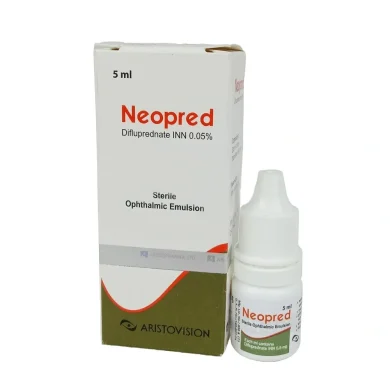


Medicine Overview of Sonexa 0.10% Eye/Ear Drops
Sonexa belongs to a group of medicines called steroids. It is used in the treatment of eye infections. It reduces the redness and swelling caused by infections, allergies, and injuries. It is sometime used after eye surgery.
Never use Sonexa if the seal is broken before you use it for the first time. Wash your hands before using it and shake the bottle well before each use. Make sure you remove contact lenses if you wear them and wait for at least 15 minutes before putting them back.
You should not discontinue using the medicine unless your doctor tells you so. Stopping the medication before time may allow the bacteria to continue their growth, which may result in return of the infection.
It may cause eye irritation, blurred vision, and bitter taste in the mouth. These side effects are usually temporary and resolve with time. If your vision is blurred or you have other changes in sight for a time, do not drive or operate other machines until your vision is clear. If you are pregnant or breastfeeding, you should consult with your doctor before using this medicine.
- Eye infection
- Eye irritation
- Watery eyes
-
Your doctor has prescribed Sonexa to treat redness and swelling (inflammation) of the eye.
-
Do not touch the tip of the dropper to any surface, or to your eye, to avoid contaminating the eye drops.
-
If you wear soft contact lenses, remove them before putting in these eye drops and wait at least 15 minutes before putting your lenses back in.
Eye: 1 or 2 drops in conjunctival sac.
Severe or acute inflammation: Every 30 to 60 minutes as initial therapy, reducing the dosage when favourable response is observed to every two to four hours.
Further reduction may be made to one drop three or four times daily if sufficient to control inflammation.
Chronic inflammation: Every three to six hours, or as necessary.
Allergic inflammation: Every three to four hours until the desired response is obtained.
Prolonged use may result in ocular hypertension and/or glaucoma, with damage to the optic nerve, defects in visual acuity, and posterior subcapsular cataract formation.Elderly, children and adolescent; pregnancy and lactation.
Lactation: Excretion in milk unknown/use caution
Cataract (4% )
Ocular hypertension, Open-angle glaucoma, optic nerve damage, and defects in visual acuity and field of vision (after prolonged use)
<1%
Transient ocular stinging, burning, local irritation, ocular discharge, ocular discomfort or pain, foreign body sensation, hyperemia, abnormal vision/blurring, pruritus, lid margin crusting, sticky sensation, increased fibrin, dry eye, conjunctival edema, corneal staining, keratitis, tearing, edema, irritation, corneal ulcer, browache, eyelid erythema, corneal edema, infiltrate, corneal erosion, mydriasis, ptosis, epithelial punctate keratitis, and possible corneal or scleral malacia, [posterior subcapsular cataracts] (prolonged use)
Pregnancy
There are no adequate or well-controlled studies in pregnant women; should be used during pregnancy only if the potential benefit to the mother justifies the potential risk to the embryo or fetus
However, prolonged or repeated corticoid use during pregnancy has been associated with an increased risk of intra-uterine growth retardation
Lactation
Systemically administered corticosteroids appear in human milk and could suppress growth, interfere with endogenous corticosteroid production, or cause other untoward effects
Unknown whether topical administration of corticosteroids could result in sufficient systemic absorption to produce detectable quantities in human milk





Reviews
Clear filtersThere are no reviews yet.