


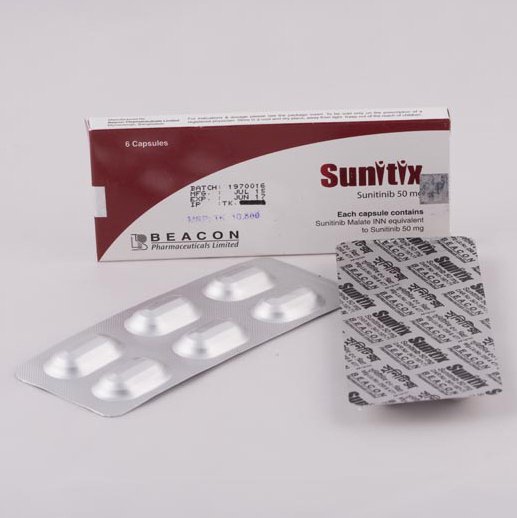

Medicine Overview of Sunitix 50mg Capsule
Sunitix is used in the treatment of kidney cancer and gastrointestinal stromal tumor.
Sunitix can be taken with or without food, but try to have it at the same time every day to get the most benefits. Your doctor will decide what dose is necessary and how often you need to take it. This will depend on what you are being treated for and may change from time to time. You should take it exactly as your doctor has advised. Taking it in the wrong way or taking too much can cause very serious side effects. It may take several weeks or months for you to see or feel the benefits but do not stop taking it unless your doctor tells you to.
Nausea, vomiting, weakness and weight loss are some common side effects of this medicine. The doctor may advise for regular monitoring of blood pressure and thyroid gland function while taking this medicine. It may decrease blood sugar levels. In fact, the levels can decrease to the extent that the patient may faint. So, if you are diabetic then it is important to check your blood sugar levels regularly. Additionally, you should also consult the doctor if the dose of anti-diabetic medicines needs to be adjusted. This medicine may affect wound healing time, so be careful while shaving, cutting fingernails or using sharp objects.
Before taking it, tell your doctor if you have heart disease, liver, or kidney problems or bleeding disorder. Many other medicines can affect, or be affected by, this medicine so let your healthcare team know all medications you are using. This medicine is not recommended during pregnancy or while breastfeeding. The use of effective contraception by both males and females during treatment is important to avoid pregnancy.
- Kidney cancer
- Gastrointestinal stromal tumour
- Nausea
- Vomiting
- Weakness
- Rash
- Abdominal pain
- Indigestion
- Discoloration of skin
- Fatigue
- Fever
- Dry skin
- High blood pressure
- Diarrhea
- Constipation
- Painful blisters on hands and feet
- Stomatitis (Inflammation of the mouth)
- Hair discoloration
- Pain in extremity
- Back pain
- Headache
- Joint pain
- Weight loss
- Cough
- Taste change
- Breathlessness
-
Sunitix is used for the treatment of thyroid cancer.
-
Take it with or without food, preferably at the same time each day.
-
Diarrhea may occur as a side effect. Drink plenty of fluids and inform your doctor if it doesn’t stop or if you find blood in your stools.
-
Use a reliable contraceptive method to prevent pregnancy while you are taking this medicine and for a month after you stop taking it.
-
It may affect wound healing time. Be careful while shaving, cutting fingernails or toenails, or using sharp objects.
-
Monitor your blood pressure regularly while taking this medication. Inform your doctor if you notice symptoms of very high blood pressure such as severe headache, confusion, problems with your eyesight, nausea or vomiting.
-
Monitoring of thyroid gland function is required while taking this medicine. Inform your doctor if you notice symptoms of weight gain, dry skin, and hair.
-
It may cause serious bleeding problem. Inform your doctor if you get headaches, stomach pain or if you notice blood in your urine or stools.
-
Inform your doctor about the consumption of Sunitix before going for surgical procedure.
-
Do not take this medicine if you are pregnant, planning to conceive or breastfeeding.
Hepatic Impairment
Mild to moderate impairment: Dose adjustment not necessary for initial dose; monitor subsequent doses
Severe impairment: Not studied
Safety and efficacy not established
Renal Impairment
No dose adjustment necessary
Multikinase inhibitor (including VEGF & PDGF receptor tyrosine kinases) some of which are implicated in tumor growth, angiogenesis, and metastasis.
CHF, HTN, history of QT interval prolongation, patients taking antiarrhythmics or w/ preexisting cardiac disease, bradycardia or electrolyte disturbances, hemorrhagic events, hypothyroidism. Perform CBC & physical exam. May affect ability to drive or operate machinery. Pregnancy.
>10%
Dyspepsia (MRCC 46%),Altered taste (MRCC 43%; GIST 21%),Fatigue (GIST 42%; MRCC 74%),Diarrhea (GIST 40%; MRCC 55%),Rash (MRCC 38%; GIST 14%),Vomiting (MRCC 37%; GIST 24%),Constipation (MRCC 34%; GIST 20%),Skin discoloration (MRCC 33%; GIST 30%),Abdominal pain (GIST 33%; MRCC 20%),Nausea (GIST 31%; MRCC 54%),Anorexia (MRCC 31%; GIST 33%),Mucositis/stomatitis (GIST 29%; MRCC 53%),Dyspnea (MRCC 28%; GIST 10%),HTN (MRCC 28%; GIST 15%),Arthralgia (MRCC 28%; GIST 12%),Bleeding (MRCC 26%; GIST 18%),Headache (MRCC 25%; GIST 13%),Asthenia (GIST 22%),Lymphopenia (MRCC 21%),Fever (GIST 18%; MRCC 15%),Limb pain (MRCC 18%),Back pain (MRCC 17%; GIST 11%),Myalgia (MRCC 17%; GIST 14%),Cough (MRCC 17%; GIST 8%),Dry skin (17%),Hair color changes (17%),Neutropenia (MRCC 13%; GIST 11%),Alopecia (MRCC 12%),Hand-foot syndrome (MRCC 12%; GIST 14%),Dehydration (MRCC 11%)
1-10%
Venous thrombotic events,Hemorrhoids,Pancreatitis,Flu-like syndrome
<1%
Hepatotoxicity,Acute renal failure,Adrenal dysfunction
Increased plasma conc w/ strong CYP3A4 inhibitors (eg ketoconazole, ritonavir, itraconazole, erythromycin, clarithromycin, grapefruit juice). Decreased plasma conc w/ strong CYP3A4 inducers [eg rifampin, dexamethasone, phenytoin, carbamazepine, phenobarb, St. John’s wort (Hypericum perforatum)]. Anticoagulants eg warfarin, acenocoumarol (periodically monitor platelets, prothrombin time/INR & physical exam).





Reviews
Clear filtersThere are no reviews yet.