



Introduction
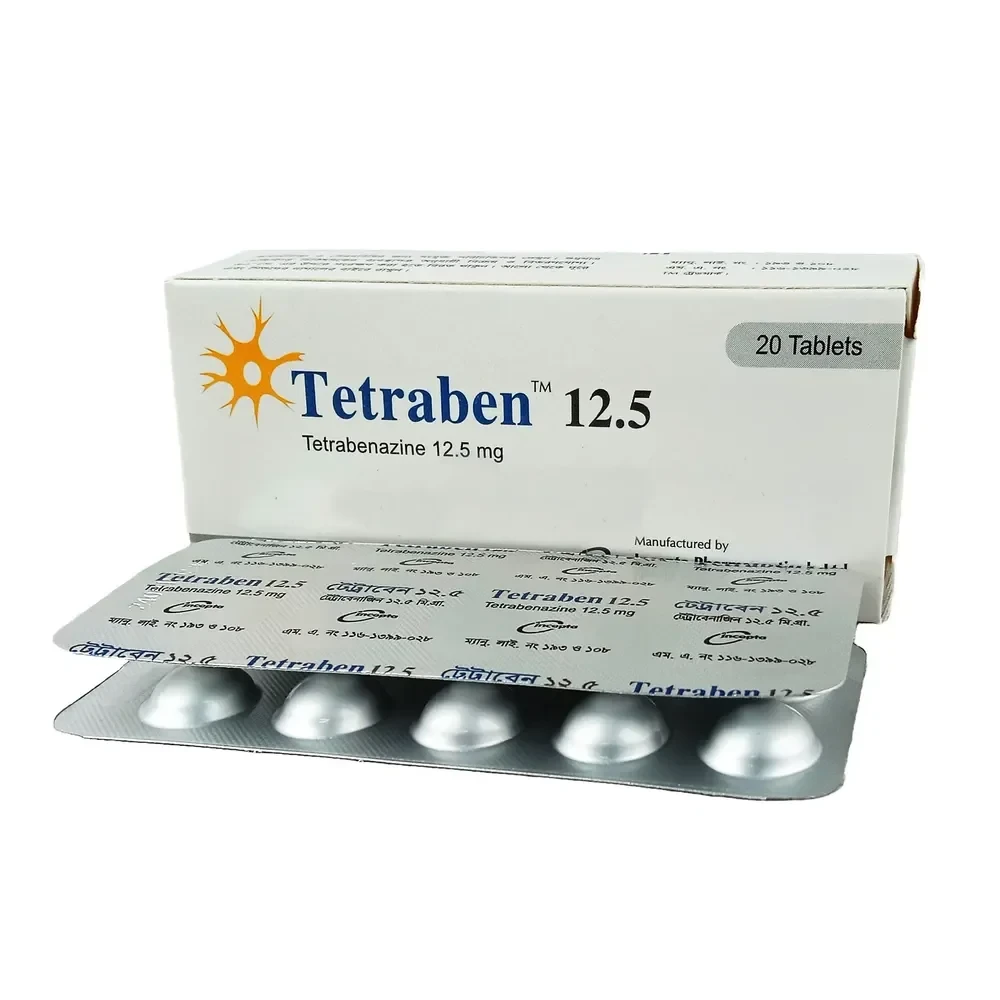
Ticstop 12.5 is a prescription medicine used to treat Huntington’s disease, a condition in which nerve cells in the brain breakdown over time, thus deteriorating the person’s physical and mental abilities. It also helps to relieve uncontrollable and jerky movements of the body. Ticstop 12.5 should be taken with or without food. However, it is advised to take it at the same time each day as this helps to maintain a consistent level of medicine in the body. Take this in the dose and duration as advised by your doctor and if you have missed a dose, take it as soon as you remember. It is important that this medication is not stopped suddenly without talking to your doctor as it may worsen your symptoms. However, discontinue this medicine immediately if you experience neuroleptic malignant syndrome, characterized by fever, muscle rigidity and altered consciousness or seizures. Some common side effects of this medicine include nausea, insomnia(difficulty sleeping), anxiety, fatigue, akathisia (restlessness and inability to stay still) and depression. It also causes dizziness and sleepiness, so do not drive or do anything that requires mental focus until you know how this medicine affects you. Inform your doctor if you develop any unusual changes in mood or behavior, new or worsening depression, or suicidal thoughts while taking this medicine.
_
Uses of Ticstop 12.5
Huntington's disease
Side effects of Ticstop 12.5
Common
Nausea
Insomnia (difficulty in sleeping)
Anxiety
Fatigue
Sleepiness
Akathisia (inability to stay still)
Depression
How to use Ticstop 12.5
Take this medicine in the dose and duration as advised by your doctor. Swallow it as a whole. Do not chew, crush or break it. Ticstop 12.5 may be taken with or without food, but it is better to take it at a fixed time.
How Ticstop 12.5 works
Ticstop 12.5 works by depleting the stores of certain chemical messengers in the brain that helps in controlling body movements.
Quick Tips
You have been prescribed Ticstop 12.5 to help control movement disorders such as in Huntington’s disease.
Be cautious while driving or doing anything that requires concentration as Ticstop 12.5 can cause dizziness and sleepiness.
Inform your doctor if you experience symptoms such as high fever, sweating, muscle stiffness, and faster breathing. These may be due to a rare side effect known as the neuroleptic malignant syndrome.
Inform your doctor if you develop any unusual changes in mood or behavior, new or worsening depression, or suicidal thoughts or behavior.
Do not stop taking Ticstop 12.5 without talking to your doctor first as it may cause worsening of symptoms.
Brief Description
Indication
Movement disorders, Moderate to severe tardive dyskinesia
Administration
May be taken with or without food.
Adult Dose
Oral Huntington Disease Indicated for treatment of chorea associated with Huntington’s disease Adult: Individualize and slowly titrate dosage over several weeks to identify a dose that reduces chorea and is well tolerated Total daily dose up to 50 mg/day 12.5 mg PO qDay initially; after 1 week, the dose should be increased to 12.5 mg q12hr Maintenance: Titrate slowly by weekly intervals of 12.5 mg/day to identify dose that reduces chorea and is tolerated If daily dose is 37.5 to 50 mg/day, administer in divided doses q8hr Elderly: Initially 12.5 mg daily, increased gradually. Total Daily dose >50 mg/day If >50 mg/day is required, test and genotype to determine if poor or extensive metabolizers of CYP2D6; not to exceed 100 mg/day or 37.5 mg/dose Moderate to severe tardive dyskinesia Adult: Initially 12.5 mg daily increased gradually according to response. Hepatic impairment Contraindicated; it is not possible to adjust the dose to ensure safe use
_
Child Dose
Safety and efficacy not established
Contraindication
Hypersensitivity. Lactation. Hepatic impairment. Patients who are actively suicidal, or who have untreated or inadequately treated depression.
Mode of Action
Reversibly inhibits human vesicular monoamine transporter type 2 (VMAT2), resulting in decreased uptake of monoamines (eg, dopamine, serotonin, norepinephrine, histamine) into synaptic vesicles and depletion of monoamine stores from nerve terminals This effect is similar to reserpine, but with less peripheral activity and is shorter-acting
_
Precaution
May exacerbate symptoms of parkinsonism. Caution to be exercised when driving or performing skilled tasks. Pregnancy. Increased risk of depression and suicidal thoughts and behavior (suicidality) in patients with Huntington’s disease. Monitor for emergence or worsening of depression, suicidality, or unusual changes in behavior. Caution in patients with a history of depression or prior suicide attempts or ideation.
Side Effect
>10% Sedation/somnolence (31%),Fatigue (22%),Insomnia (22%),Depression (19%),Akathisia (19%),Extrapyramidal event (15%),Anxiety (15%),Nausea (13%) 1-10% Irritability (9%),Bruising (6%),Vomiting (6%),Decreased appetite (4%),Dysuria (4%),Obsessive reaction (4%),Imbalance (9%),Parkinsonism/bradykinesia (9%),Dizziness (4%),Dysarthria (4%),Unsteady gait (4%),Headache (4%) Frequency Not Defined QTc prolongation,Neuroleptic malignant syndrome,Orthostatic Hypotension,Restlessness and agitation,Dysphagia,Depression and suicidality Potentially Fatal: Neuroleptic malignant syndrome (NMS).
_
Pregnancy Category Note
Pregnancy There are no adequate data on the developmental risk associated with therapy in pregnant women; administration of tetrabenazine to rats throughout pregnancy and lactation resulted in an increase in stillbirths and postnatal offspring mortality Lactation There are no data on presence of tetrabenazine or metabolites in human milk, effects on breastfed infant, or on milk production; developmental and health benefits of breastfeeding should be considered along with mother’s clinical need for therapy and potential adverse effects on breastfed infant or underlying maternal condition
_
Interaction
Tetrabenazine should not be given with or within 14 days of discontinuation of MAOI therapy. Blocks action of reserpine. Decreases effects of levodopa and worsen parkinsonism. Increased risk of extrapyramidal side effects when given with amantadine, metoclopramide, antipsychotics.




Reviews
Clear filtersThere are no reviews yet.