




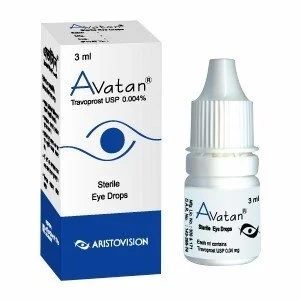
Medicine Overview of Travotan 0.004% Eye Drop
Travotan is a medicine used to reduce pressure in the eyes in adults with glaucoma and high pressure in the eye. If the pressure in your eye is too high it can damage your sight, potentially leading to blindness. It works by helping fluid flow from inside the eye into the blood.
Travotan can be used alone or in combination with other eye medicines to reduce pressure. Follow the instructions given by your doctor and use this medicine regularly to get the most benefit. If you stop using it, pressure in the eye could increase and damage your sight. Never use a bottle if the seal is broken before you use it for the first time. Make sure you remove contact lenses if you wear them and wait for at least 15 minutes before putting them back.
The most common side effects of this medicine include puffy eyelids, eye pain, and sensitivity to light. It may also cause blurred vision, dryness in the eye, a gradual change in color of the eye, and other rarer effects. If you get any side effects, talk to your doctor. They may be able to tell you ways of reducing or preventing some side effects or suggest another treatment. If your vision is blurred or you have other changes in sight for a time, do not drive until your vision is clear. This is usually a short-term side effect.
Do not use Travotan if you are pregnant, trying to become pregnant, or if you are breastfeeding.
- Glaucoma
- Ocular hypertension
- Conjunctival hyperemia
-
For best results, put one drop once a day in the evening/night in the affected eye(s).
-
Apply pressure on the corner of the eye (close to the nose) for about 1 minute, immediately after instilling the drop.
-
Travotan may cause brown pigmentation of the iris. This discoloration may be permanent.
-
Your eyelashes may become more dense and eyelid skin may darken. These changes should disappear after discontinuing Travotan.
-
Wait for at least 5-10 minutes before delivering the next medication in the same eye to avoid dilution.
-
Travotan helps lower high pressure in the eye and reduces the risk of vision loss.
Ophthalmic
Ocular hypertension; Open-angle glaucoma
Adult: As 0.004% soln: Instill 1 drop in the conjunctival sac of the affected eye(s) once daily, preferably in the evening.
Aphakic patient, pseudophakic patient w/ torn posterior lens capsule or anterior chamber lenses, or w/ known risk factor for cystoid macular oedema. Patient w/ history of intraocular inflammation (e.g. uveitis, iritis). Pregnancy and lactation. Patient Counselling Remove contact lenses prior to admin and reinsert after 15 min.
Lactation: distributed in milk in animals; caution if used in nursing women
>10%
Increased pigmentation of iris & periorbital tissue & increased pigmentation, thickening, elongation & growth of eyelashes (59%),Ocular hyperemia (35-50%)
1-10%
Decreased visual acuity (5-10%),Ocular discomfort (5-10%),Foreign body sensation (5-10%),Pain (5-10%),Pruritus (5-10%),Abnormal vision (1-4%),Blepharitis (1-4%),Blurred vision (1-4%),Cataract (1-4%),Conjunctivitis (1-4%),Dry eye (1-4%),Iris discoloration (1-4%),Keratitis (1-4%),Lid margin crusting (1-4%),Photophobia (1-4%),Subconjunctival hemorrhage (1-4%),Tearing (1-4%)



Reviews
Clear filtersThere are no reviews yet.