



Introduction
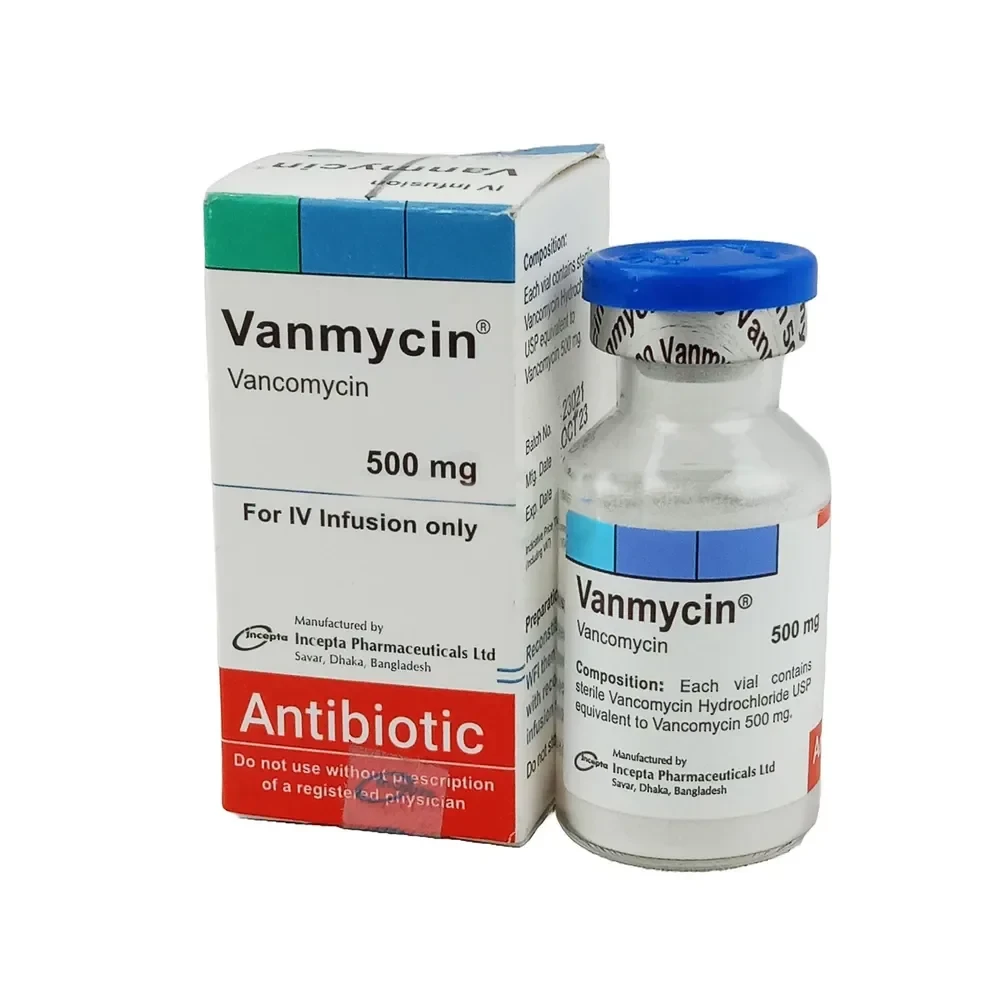
Vanmycin 500 is an antibiotic used in the treatment of severe bacterial infections in hospitalized patients. It is effective against infections of the respiratory tract (e.g. pneumonia), urinary tract, skin and soft tissues, bones and joints, heart, blood and others. Vanmycin 500 is also used for the prevention of infection in some high-risk patients undergoing surgical procedures. It works by stopping the growth of bacteria and is useful for treating adults as well as children. It is a narrow-spectrum antibiotic that only covers the gram-positive type of bacteria. This medicine is administered slowly by a drip (infusion) into a vein, under the supervision of a healthcare professional. A rapid infusion can lead to reactions such as low blood pressure, wheezing, shortness of breath or itching. It may also be combined with other antibiotics to treat additional types of bacteria. Some people may develop local injection site reactions like pain, swelling, and redness. However, these are usually minor and temporary. Other side effects like wheezing, kidney (renal) injury, shortness of breath, flushing (sense of warmth in the face, ears, neck, and trunk) and decreased blood pressure may be seen occasionally. Inform your doctor if you have a history of an allergic reaction to this medication in the past. Your doctor may regularly monitor your kidney function and your hearing while you are taking this medicine. Some people may be advised blood tests to check the level of this medicine in their blood. Consult your doctor if you are pregnant or breastfeeding before taking this medicine.
_
Uses of Vanmycin 500
Severe bacterial infections
Side effects of Vanmycin 500
Common
Breathlessness
Decreased blood pressure
Wheezing
Renal injury
Flushing (sense of warmth in the face, ears, neck and trunk)
How to use Vanmycin 500
Your doctor or nurse will give you this medicine. Kindly do not self administer.
How Vanmycin 500 works
Vanmycin 500 is an antibiotic. It kills bacteria by preventing them from forming the bacterial protective covering (cell wall) which is needed for them to survive.
Quick Tips
You have been prescribed Vanmycin 500 to treat serious bacterial infections of the heart, blood, bones, and soft tissues.
Do not skip any doses and finish the full course of treatment even if you feel better. Stopping it early may make the infection to come back and harder to treat.
It should be taken slowly via a drip. Fast infusion can lead to reactions such as low blood pressure, wheezing, shortness of breath or itching.
Your doctor may regularly monitor your kidney function and your hearing while you are taking this medicine.
Your doctor may get regular blood tests done to check the level of this medicine in your blood.
Inform your doctor if you are pregnant, planning to conceive, or breastfeeding.
Brief Description
Indication
Septicaemia, Soft tissue infections, Osteomyelitis, Enterocolitis, Colitis, Serious staphylococcal or other Gm +ve infections, Bacterial endocarditis
Administration
IV Preparation Add 10 mL of SWI to 500-mg vial and 20 mL of SWI to 1-g vial to yield 50 mg/mL solution; further dilution is required, depending on method of administration Intermittent infusion: Dilute 500 mg with ?100 mL of diluent and 1 g with ?200 mL of diluent (NS or D5W) Continuous infusion: Dilute in sufficient amount to permit infusion over 24 hours IV Administration Intermittent (preferred): Administer over 60 minutes; not to exceed 10 mg/min Continuous: Administer over 24 hours
_
Adult Dose
Intravenous Severe staphylococcal or other Gram-positive infections, Endocarditis Adult: 500 mg 6 hrly, infused over at least 60 min or 1 g 12 hrly, infused over at least 100 min. Elderly: Dosage adjustment needed.
_
Child Dose
Intravenous Children Severe staphylococcal or other Gram-positive infections, Endocarditis <1 month: 15 mg/kg followed by 10 mg/kg IV q12hr for neonates in first week of life and q8hr thereafter up to 1 month of age; longer dosing intervals recommended in premature infants >1 month: 10 mg/kg/day IV divided q6hr; individual dose not to exceed 1 g
_
Renal Dose
Renal impairment: Patient on intermittent haemodialysis: Loading dose: 15-25 mg/kg on day 1, followed by 5-10 mg/kg maintenance dose after each dialysis run. Anuric patient (w/o kidney function) on dialysis: Initially, 15 mg/kg. Maintenance: 1.9 mg/kg 24 hrly. CrCl (ml/min) Dosage Recommendation <20 Longer intervals; determine by serum concentration monitoring. 20-49 Initially, 15-20 mg/kg/dose (usual: 750-1,500 mg) 24 hrly. >50 Initially, 15-20 mg/kg/dose (usual: 750-1,500 mg) 8-12 hrly.
_
Contraindication
Hypersensitivity to the drug; history of impaired hearing; IM administration.
Mode of Action
Vancomycin binds tightly to D-alanyl-D-alanine portion cell wall precursor causing blockage of glycopeptide polymerisation which produces immediate inhibition of cell wall synthesis and secondary damage to the cytoplasmic membrane.
Precaution
Patient w/ allergic reaction to teicoplanin, previous hearing loss, inflammatory bowel disease. Renal impairment. Elderly. Pregnancy and lactation. Monitoring Parameters Determine regularly serial tests of auditory function and serum or blood vancomycin concentrations during treatment. Periodic urinalysis and renal function tests. Monitor leukocyte count in prolonged therapy. Lactation: Drug enters breast milk; not recommended
_
Side Effect
>10% Erythematous rash on face and upper body (red neck or red man syndrome; related to infusion rate),Hypotension accompanied by flushing 1-10% Chills,Drug fever,Eosinophilia,Rash,Reversible neutropenia,Phlebitis <1% Nephrotoxicity,Ototoxicity (especially with large doses),Stevens-Johnson syndrome,Thrombocytopenia,Vasculitis Potentially Fatal: Stevens-Johnson syndrome; toxic epidermal necrolysis, blood dyscrasias such as neutropenia or thrombocytopenia.
_
Interaction
General anaesth may enhance the adverse effects of vancomycin. Increased risk of ototoxicity and nephrotoxicity w/ aminoglycosides, polymyxins, ciclosporin, cisplatin and loop diuretics. Increased potential of neuromuscular blockade w/ suxamethonium or vecuronium.


Reviews
Clear filtersThere are no reviews yet.