


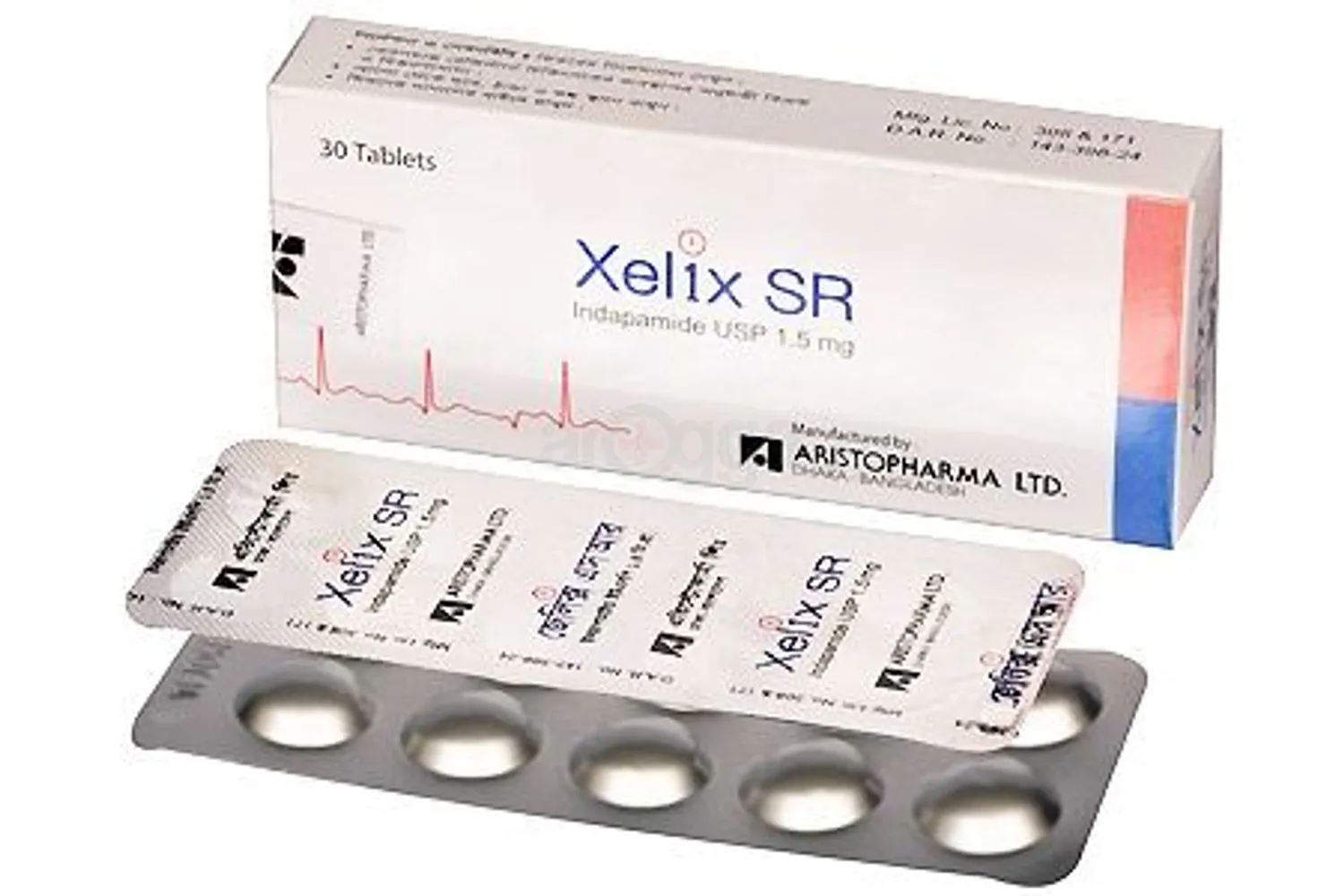

Medicine Overview of Xelix SR 1.5mg Tablet
Introduction
Xelix SR is a diuretic (water pill) medicine used to treat hypertension (high blood pressure). This medicine reduces excess fluid levels in the body and treats edema (fluid overload) associated with heart, liver, kidney, or lung disease. Xelix SR makes you lose excess water through urine. It may be used alone or in combination with other medicines. This medicine should be taken only during day time to avoid frequent urination at night. You must take this medicine in the dose and duration as advised by the doctor and never stop it abruptly without consulting the doctor. Most people with high
Uses of Xelix SR
- Hypertension (high blood pressure)
Side effects of Xelix SR
Common
- Dizziness
- Headache
- Fatigue
- Nausea
- Gastrointesinal symptoms
- Muscle cramp
How to use Xelix SR
Take this medicine in the dose and duration as advised by your doctor. Swallow it as a whole. Do not chew, crush or break it. Xelix SR may be taken with or without food, but it is better to take it at a fixed time.
How Xelix SR works
Xelix SR is a thiazide diuretic. It lowers blood pressure by removing the extra water and certain electrolytes from the body. Over time it also works by relaxing blood vessels and improving blood flow.
What if you forget to take Xelix SR?
If you miss a dose of Xelix SR, take it as soon as possible. However, if it is almost time for your next dose, skip the missed dose and go back to your regular schedule. Do not double the dose.
Quick Tips
-
It makes you feel dizzy. Avoid driving and attention requiring activity until you know how it affects you.
-
Avoid alcohol intake while taking Natrilix SR Tablet as it may increase the dizziness.
-
It may cause a sudden drop of sodium level in blood. Avoid low sodium diet while you are taking this medication.
-
Monitor your blood pressure after starting Natrilix SR Tablet, and notify your doctor if it does not lower down.
-
Notify your doctor if you experience dizziness, tiredness, or muscle weakness that does not go away.
-
Inform your doctor if you are pregnant, planning pregnancy or breastfeeding.
Brief Description
Indication
Hypertension, Congestive heart failure
Administration
Should be taken with food.
Adult Dose
Oral
Hypertension
Adult: 1.25-2.5 mg once daily, alone or in conjunction with other antihypertensives.
Hypertension
Adult: 1.25-2.5 mg once daily, alone or in conjunction with other antihypertensives.
Oedema
Adult: 2.5 mg once daily increased to 5 mg daily after 1 wk if needed.
Child Dose
Safety & efficacy not established
Contraindication
Anuria, severe hepatic impairment.
Mode of Action
Indapamide enhances excretion of sodium, chloride and water by interfering with the transport of sodium ions across the renal tubular epithelium.
Precaution
Pregnancy, lactation, elderly, renal impairment, fluid or electrolyte imbalance, hyperuricaemia, DM, lupus erythematosus.
Lactation: not known if excreted into breast milk, avoid
Side Effect
1-10%
Hypotension,Palpation,Flushing,Dizziness,Lightheadedness,Vertigo,Headache,Weakness,Restlessness,Drowsiness,Fatigue,Lethargy,Malaise,Anorexia,Nausea/vomiting,Nocturia,Polyuria,Blurred vision,Rhinnorhea,Electrolyte abnormalities,Pruritus,Rash
Hypotension,Palpation,Flushing,Dizziness,Lightheadedness,Vertigo,Headache,Weakness,Restlessness,Drowsiness,Fatigue,Lethargy,Malaise,Anorexia,Nausea/vomiting,Nocturia,Polyuria,Blurred vision,Rhinnorhea,Electrolyte abnormalities,Pruritus,Rash
<1%
Cutaneous vasculitis,Glycosuria,Pancreatitis
Interaction
Additive effect with other antihypertensive agents and diuretics. Increased chance of hypokalaemia with corticosteroids, corticotropin and amphotericin.
Potentially Fatal: Increased risk of lithium toxicity. Hypokalaemia enhances digitalis toxicity with cardiac gycosides.





Reviews
Clear filtersThere are no reviews yet.