


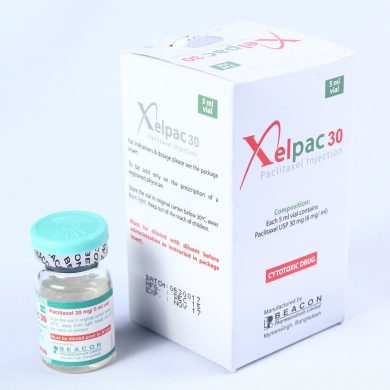


Medicine Overview of Xorubin 2mg/ml Injection
Xorubin is used in the treatment of some kinds of cancer. It is also used in the treatment of breast cancer, where there is an increased cardiac risk. It can be used on its own, or sometimes given together with certain other medicines as part of combination chemotherapy.
Xorubin can be used in both adults and children. It is given as injection into vein with extreme caution by a qualified medical professional. Your doctor will decide what dose is necessary and how often you need to take it. This will depend on what you are being treated for and may change from time to time. You should take it exactly as your doctor has advised. Taking it in the wrong way or taking too much can cause very serious side effects. It may take several weeks or months for you to see or feel the benefits but do not stop taking it unless your doctor tells you to. It makes contraceptive pills less effective, so it advised to use reliable contraception during and after 6 months of the treatment.
The most common side effects of this medicine include nausea, vomiting, rash, weakness, low blood platelets. If they do not go away or get worse, tell your doctor. There may be ways of preventing or reducing these effects. It is very strong medicine and some people may develop serious side effects while taking it. This medicine may lead to problems with your blood, liver or heart. Your doctor will advise you regular blood tests to check for these.
Before taking this medicine, let your doctor know if you have liver disease. Your doctor should also know about all other medicines you are taking as many of these may make this medicine less effective or change the way it works. Tell your doctor if you are pregnant or breastfeeding.
- Cancer
- Nausea
- Vomiting
- Rash
- Weakness
- Low blood platelets
- Fatigue
- Fever
- Decreased white blood cell count (neutrophils)
- Loss of appetite
- Anemia (low number of red blood cells)
- Constipation
- Stomatitis (Inflammation of the mouth)
- Diarrhea
- Painful blisters on hands and feet
-
Xorubin helps treat cancer of the breast, blood, and ovaries.
-
It is given through a drip into a vein (intravenous infusion) by a doctor or nurse.
-
It may make you feel tired or sleepy. Do not drive or do anything that requires mental focus until you know how it affects you.
-
Use a reliable contraceptive method to prevent pregnancy while you are taking this medicine and for 6 months after stopping treatment.
-
Inform your doctor if you notice sores, discolouration or any discomfort in your mouth.
-
Your doctor may get regular blood tests done to monitor your blood cells, liver, and heart function during treatment with this medicine.
-
Inform your doctor immediately if you notice any signs of infection such as fever, sore throat or rash.
Intravenous
As Doxorubicin liposomal
Kaposi’s Sarcoma
Indicated for AIDS-related Kaposi’s sarcoma in patients after failure of prior systemic chemotherapy or intolerance to such therapy
20 mg/m² IV q3Weeks
Ovarian Cancer
Indicated for ovarian cancer in patients whose disease has progressed or recurred after platinum-based chemotherapy
50 mg/m² IV q4Weeks x 4 courses minimum
Multiple Myeloma
Indicated in combination with bortezomib for multiple myeloma in patients who have not previously received bortezomib and have received at least 1 prior therapy
30 mg/m² IV on day 4 following bortezomib 1.3 mg/m² on days 1, 4, 8 & 11 q3Weeks
Metastatic breast cancer
Adult: 60-75 mg/m2 BSA once every 3 wk in combination with cyclophosphamide given as an infusion over 1 hr diluted in 0.9% sodium chloride or 5% glucose.
Irrigation
Local malignant neoplasms in the bladder
Adult: 50 ml of a 1 mg/ml solution instilled into the bladder for 1 hr once a mth.
Hepatic Impairment
Serum bilirubin <1.2 mg/dL: Dose adjustment not necessary
Serum bilirubin 1.2-3 mg/dL [20.5-51.3 micromoles/L]: Give 50% dose
Serum bilirubin: 3.1-5 mg/dL [53-85.5 micromoles/L]: Give 25% dose
Severe hepatic impairment: Contraindicated
Safety and efficacy not established
Renal Impairment
Dose adjustment not necessary
Elderly, children, hepatic impairment. Monitor blood counts and ECG.
Lactation: Enters breast milk/not recommended
>10%
Kaposi’s Sarcoma
Anemia (>50%),Thrombocytopenia (>50%),Neutropenia (10-50%),Anemia (18.2%),Nausea (17%)
Ovarian cancer
>25%
Hand-foot syndrome (50%),Nausea (46%),Stomatitis (41%),Asthenia (40.2%),Vomiting (32.6%),Rash (28%),Constipation (>25%),Abdominal pain (>25%)
Ovarian cancer
10-25%
Fever (21.3%),Anorexia (20%),Diarrhea (20%),Peripheral edema,Dyspepsia,Pharyngitis,Dyspnea,Alopecia
1-10%
Kaposi’s Sarcoma
5-10%
Asthenia (9.9%),Fever (9.1%),Diarrhea (7.8%),Vomiting (7.8%),Stomatitis (6.8%),Rash (1-5%),Alopecia (1-5%),Increased alkaline phosphatase
Kaposi’s Sarcoma
1-5%
Hand-foot syndrome (3.4%),Hypotension,Tachycardia,Dyspnea,Hemolysis,Rash
Ovarian cancer (selected)
Neutropenia (13.3%),Anemia (0.4-5.4%),Thrombocytopenia (1.3%)
<1%
Abscess,Acute myeloid leukemia,Cardiomegaly,Cardiomyopathy,Erythema nodosum,Hyperkalemia,Hyperuricemia,Ketosis
Potentially Fatal: Bone marrow suppression, cardiotoxicity.
Pregnancy Category: D
Lactation: Enters breast milk/not recommended
Doxorubicin interacts with a number of other drugs e.g. antibiotics (aminoglycosides), steroids, aminophylline and propranolol.
Potentially Fatal: Cholestasis induced by mercaptopurine may be potentiated by concurrent administration of the drug. Toxicity may be increased if streptozocin is given concurrently.





Reviews
Clear filtersThere are no reviews yet.