



Introduction
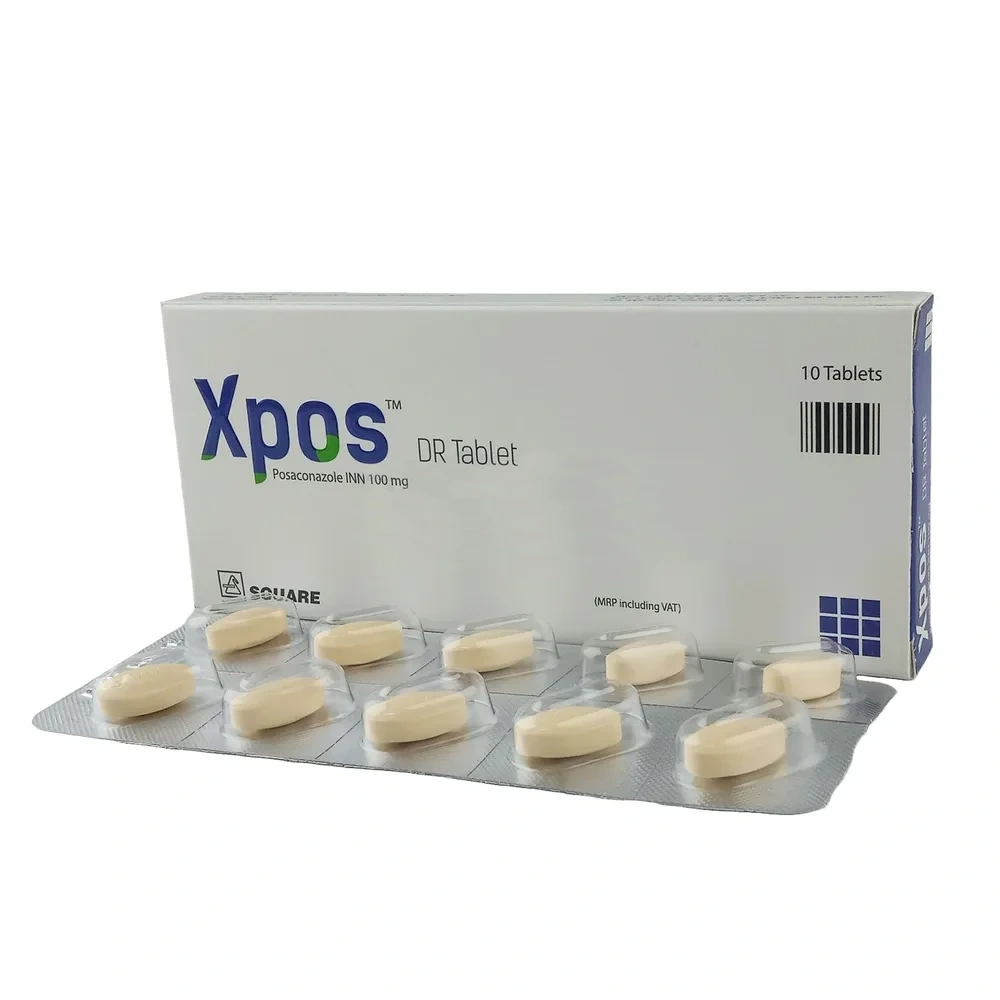
Xpos 100 DR belongs to a group of medicines called antifungals. It works by stopping the growth of fungus and is used to treat fungal infection. It kills fungi by destroying the fungal cell membrane. Xpos 100 DR is an injectable drug and given as an injection by a healthcare professional. Do not self administered the injection. Your doctor or nurse will teach you the correct way of injecting it. To get the most benefit, take this medicine at evenly spaced times and continue using it until your prescription is finished, even if your symptoms disappear after a few days. If you stop treatment too early, the infection may return and if you miss doses you can increase your risk of infections that are resistant to further treatment. The most common side effects of this medicine include headache, diarrhea, feeling sick (nausea) and low potassium level. These are not usually serious, but you should call your doctor if you think you might have a severe allergic reaction and sign of liver problems such as yellowing of eyes, dark urine and stomach problems. Get emergency help if this happens. Do not take it if you are pregnant or could become pregnant unless your doctor has told you to. Talk to your doctor before taking it if you have ever had heart failure, kidney problems or liver problems such as yellow skin (jaundice). This medicine may not be suitable for you. If your course of treatment is for more than a month, your doctor may want to check your liver, and potassium level by testing your blood. This medicine may make you dizzy or have blurred vision so do not drive or operate machines until it is safe.
_
Uses of Xpos 100 DR
Severe fungal infections
Side effects of Xpos 100 DR
Common
Headache
Vomiting
Cough
Nausea
How to use Xpos 100 DR
Your doctor or nurse will give you this medicine. Kindly do not self administer.
How Xpos 100 DR works
Xpos 100 DR is an antifungal medication. It kills fungi by destroying the fungal cell membrane. This treats your infection.
Quick Tips
Your doctor has prescribed Xpos 100 DR to cure your infection and improve symptoms.
Do not skip any doses and finish the full course of treatment even if you feel better.
It is given as an injection under the supervision of a healthcare professional.
Your doctor may check your liver function before starting treatment and regularly thereafter. Inform your doctor if you notice yellowing of eyes or skin, dark urine, or stomach pain.
Inform your doctor if you are pregnant, planning pregnancy or breastfeeding.
Brief Description
Indication
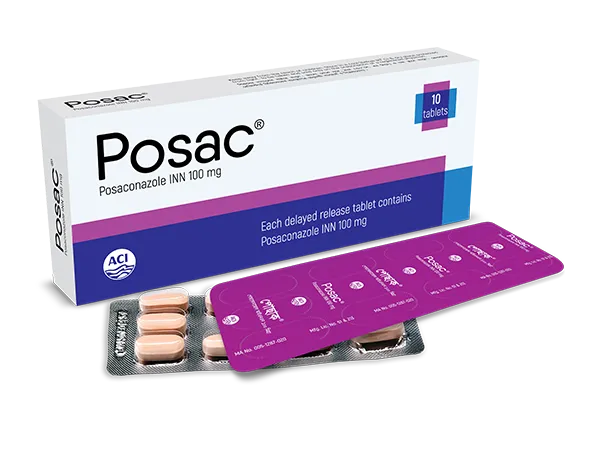
Prophylaxis of invasive Aspergillus, Candida Infections, Oropharyngeal candidiasis
Administration
IV Preparation Equilibrate the refrigerated vial to room temperature Aseptically transfer 16.7 mL (300 mg) of solution to an IV bag/bottle containing approximately 150 mL of 5% dextrose in water or sodium chloride 0.9% Should only be administered with these diluents; use of other infusion solutions may result in particulate formation Posaconazole injection is a single dose sterile solution without preservatives; once admixed, the product should be used immediately The diluted solution ranges from colorless to yellow IV Administration Must be administered through a 0.22 micron polyethersulfone (PES) or polyvinylidene difluoride (PVDF) filter Should be administered via a central venous line, including a central venous catheter or peripherally inserted central catheter (PICC), by slow IV infusion over ~90 minutes If a central venous catheter is not available, may administer through a peripheral venous catheter by slow IV infusion over 30 minutes only as a single dose in advance of central venous line placement or to bridge the period during which a central venous line is replaced or is in use for other IV treatment When multiple dosing is required, the infusion should be done via a central venous line Not for IV bolus injection Oral Administration Tablets and oral suspension are not interchangeable because of differences in dosing for each formulation Tablets Take tablets with food Tablets: Swallow whole; do not divide, crush, or chew Oral suspension Oral suspension should be taken with a full meal or liquid nutritional supplement or an acidic carbonated beverage (eg, ginger ale) in patients unable to eat a full meal
_
Adult Dose
Oral Prophylaxis of invasive fungal infections Adult: As delayed-release tab: 300 mg bid on the 1st day, then 300 mg once daily thereafter. As oral susp: 200 mg tid. Treatment duration is based on recovery from neutropenia or immunosuppression. Oral Oropharyngeal candidiasis Adult: As oral susp: 100 mg bid on the 1st day, then 100 mg once daily, for 13 days. Oropharyngeal candidiasis refractory to itraconazole and/or fluconazole Adult: As oral susp: 400 mg bid. Treatment duration is based on patient’s underlying disease and clinical response. Intravenous Prophylaxis of invasive fungal infections Adult: 300 mg bid on the 1st day, then 300 mg once daily thereafter. Treatment duration is based on recovery from neutropenia or immunosuppression.
_
Child Dose
Invasive Aspergillus & Candida Infections Indicated for prophylaxis of invasive Aspergillus and Candida infections in patients who are at high risk of developing these infections due to being severely immunocompromised (eg, hematopoietic stem cell transplant recipients with GVHD, hematologic malignancies with prolonged neutropenia from chemotherapy) <18 years (IV): Safety and efficacy not established <13 years (tablets and oral suspension): Safety and efficacy not established >13 years Oral suspension: 200 mg (5 mL) TID Tablet: 300 mg PO BID on Day 1, then 300 mg PO qDay Duration of therapy is based on recovery from neutropenia or immunosuppression Oropharyngeal Candidiasis Oral suspension is indicated for oropharyngeal candidiasis <13 years: Safety and efficacy not established >13 years Oral suspension: 100 mg (2.5 mL) PO BID on Day 1, then 100 mg PO qDay for 13 days Refractory to itraconazole and/or fluconazole: 400 mg (10 mL) PO BID; duration based on severity of underlying disease and clinical response
_
Renal Dose
Moderate-to-severe renal impairment (IV) eGFR <50 mL/min: Avoid IV administration unless benefit/risk assessment justifies use Accumulation of the IV vehicle, SBECD, is expected to occur Serum creatinine levels should be closely monitored; if increases occur, consideration should be given to changing to oral posaconazole therapy Severe renal impairment (tablets or oral suspension) Variability of systemic exposure with tablets or oral suspension observed Monitored closely for breakthrough fungal infections
_
Contraindication
Hypersensitivity. Co-admin w/ sirolimus, ergot alkaloids (e.g. ergotamine, dihydroergotamine), CYP3A4 substrates (terfenadine, astemizole, cisapride, pimozide, halofantrine, or quinidine), and HMG-CoA reductase inhibitors (e.g. simvastatin, lovastatin, atorvastatin).
Mode of Action
Blocks the synthesis of ergosterol, a key component of the fungal cell membrane, through the inhibition of the enzyme lanosterol 14-α-demethylase and accumulation of methylated sterol precursors. Posaconazole has activity against Candida spp., Aspergillus spp., Coccidioides immitis, Fonsecaea pedrosoi, and some species of Fusarium and zygomycetes.
Precaution
Patient w/ potentially proarrhythmic conditions. Hepatic impairment. Pregnancy and lactation. Patient Counselling May impair ability to drive or operate machinery. Monitoring Parameters Monitor hepatic and renal function, electrolyte disturbances (e.g. Ca, Mg, K), CBC, breakthrough fungal infections and adequate oral intake.
_
Side Effect
>10% Fever (45%) Diarrhea (42%) Nausea (38%) Hypokalemia (30%) Headache (28%) Abd pain (27%) Anemia (25%) Cough (24%) Nausea (38%) Thrombocytopenia (29%) Constipation (21%) Dyspnea (20%) Febrile neutropenia (20%) Rigors (20%) Rash (19%) Bacteremia (18%) HTN (18%) Hypomagnesemia (18%) Fatigue (17%) Insomnia (17%) Mucositis (17%) Musculoskeletal pain (16%) Anorexia (15%) Herpes simplex (15%) Leg edema (15%) CMV infection (14%) Epistaxis (14%) Hypotension (14%) Pharyngitis (12%) Arthralgia (11%) Dizziness (11%) Hypoglycemia (11%) Petechiae (11%) Pruritus (11%) Back pain (10%) Dyspepsia (10%) Vaginal hemorrhage (10%) 1-10% Anxiety (9%) Edema (9%) Hypocalcemia (9%) Weakness (8%) URI (7%)
_
Pregnancy Category Note
Pregnancy Available data in pregnant women are insufficient to establish a drug- associated risk of major birth defects, miscarriage, or adverse maternal or fetal outcomes; based on findings from animal data, therapy may cause fetal harm when administered to pregnant women Animal data Skeletal malformations (cranial malformations and missing ribs) and maternal toxicity (reduced food consumption and reduced body weight gain) observed when dosed orally to pregnant rats; during organogenesis at doses greater than or equal to 1.4 times the 400 mg twice daily oral suspension regimen recommended in humans; in pregnant rabbits dosed orally during organogenesis, increased resorptions, reduced litter size, and reduced body weight gain of females were seen at doses 5 times the exposure achieved with the 400 mg twice daily oral suspension regimen; doses of ?3 times the clinical exposure caused an increase in resorptions in these rabbits; based on animal data, advise pregnant women of potential risk to a fetus Lactation There are no data on presence of drug in human milk, effects on breastfed infant, or on milk production; drug is excreted in milk of lactating rats; when a drug is present in animal milk, it is likely that the drug will be present in human milk; developmental and health benefits of breastfeeding should be considered along with mother’s clinical need for drug and any potential adverse effects on breastfed child from drug or from underlying maternal condition
_
Interaction
Decreased plasma concentrations w/ efavirenz, fosamprenavir, cimetidine, esomeprazole, metoclopramide, phenytoin and rifabutin. May increase plasma concentration of ritonavir and atazanavir. May increase risk of neurotoxicity w/ vinca alkaloids (e.g. vincristine, vinblastine). May increase plasma concentrations of tacrolimus, ciclosporin, midazolam, Ca channel blockers (e.g. verapamil, diltiazem, nifedipine, nicardipine, felodipine) and digoxin.


Reviews
Clear filtersThere are no reviews yet.