


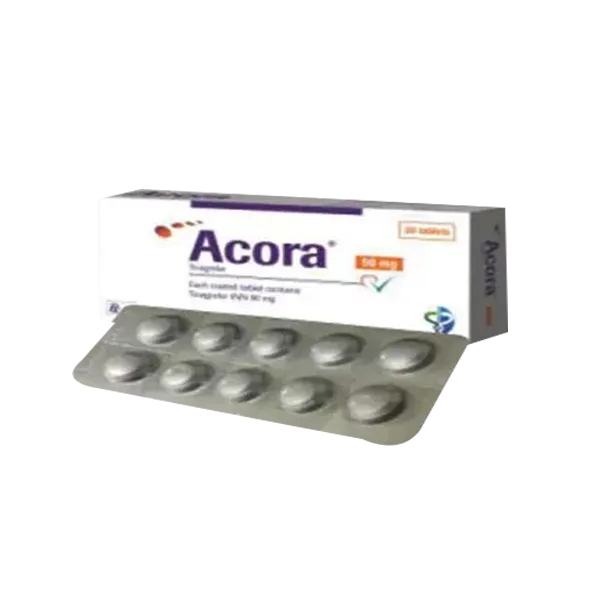

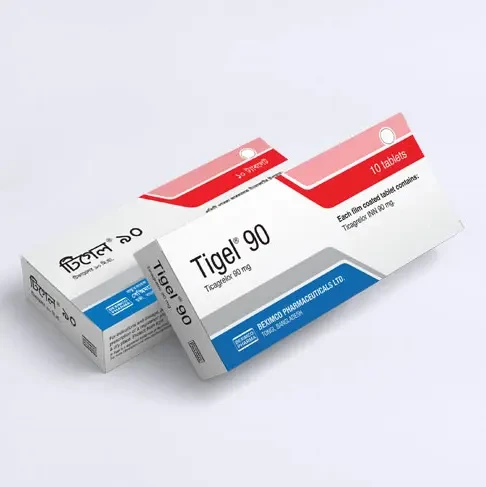
Medicine Overview of Acora 90mg Tablet
Acora belongs to a group of medicines called antiplatelets or blood thinners. It reduces the formation of harmful blood clots in blood vessels. This helps to prevent a heart attack or stroke in people with heart disease.
Acora is also used to treat people with a recent heart attack or severe heart-related chest pain (unstable angina), who have undergone stenting of the heart. It helps to prevent serious heart-related problems like having another heart attack, stroke, or formation of blood clots in stents in such people.
Your doctor will also prescribe aspirin, another antiplatelet medicine, along with it. This medicine may be taken with or without food and should be taken regularly at the same time each day. It is important to keep taking this medicine even if you feel well. If you stop taking this medicine, it may increase your chances of having another heart attack or stroke.
The most common side effect seen with this medicine is bleeding. If you cut or injure yourself, it may take longer than usual for the bleeding to stop. Such episodes of bleeding are usually mild and resolve on their own. Some people may develop mild breathlessness after taking this medicine, however, this usually resolves on its own with continued treatment. Let your doctor know if bleeding persists or if the breathlessness worsens or does not go away.
Acora is not suitable for some people. Do not take it if you are bleeding from anywhere in the body such as a stomach ulcer or bleeding within the brain, or if you have severe liver problems.
Show less
- Prevention of heart attack and stroke
- Heart attack
- Bleeding
- Breathlessness
-
For best results, take it at the same time every day.
-
Acora increases your risk of bleeding. Be careful while shaving, using sharp objects, or cutting fingernails or toenails.
-
Do not discontinue using the medicine without consulting your doctor as this may increase your chances of having another heart attack or stroke.
-
If you are scheduled to undergo a surgery or dental treatment, you may be asked to stop taking Acora temporarily.
-
You may experience shortness of breath in the initial weeks of therapy. Notify your doctor if it becomes worse or persists for long.
Oral
Acute coronary syndrome
Adult:
Loading dose (following ACS event): 180 mg PO (two 90 mg tablets)
Maintenance dose (for first year following ACS event): 90 mg PO BID
Maintenance dose (after 1 year with history of MI): 60 mg PO BID
Administer with aspirin: Initial aspirin loading dose of 325 mg, then maintenance dose of aspirin of 75-100 mg/day; DO NOT exceed aspirin dose of 100 mg/day.
Hepatic Impairment Moderate to severe: Contraindicated.
Show less
Renal impairment
No dosage adjustment needed
Show less
History of Intracranial Hemorrhage: Ticagrelor is not recommended in patients with a history of intracranial hemorrhage (ICH) due to a high risk of recurrent ICH in this population. Active Bleeding: Patients with active pathological bleeding eg, peptic ulcer or intracranial hemorrhage.
Severe Hepatic Impairment: Patients with severe hepatic impairment because of a probable increase in exposure, and it has not been studied in these patients. Severe hepatic impairment increases the risk of bleeding because of reduced synthesis of coagulation proteins.
Hypersensitivity (eg, angioedema) to ticagrelor or to any of the components.
Show less
Patients w/ increased risk of bleeding (e.g. patients who are likely to undergo surgery or invasive procedures). Patients at risk of bradycardic events; w/ history of asthma or COPD, hyperuricaemia or gouty arthritis. Pregnancy and lactation.
Lactation: Unknown whether distributed in human breast milk; potential for serious adverse reactions in breastfed infants, a decision should be made whether to discontinue nursing or to discontinue drug, taking into account the importance of the drug to the mother
Show less
>10%
Dyspnea (13.8%),Bleeding
1-10%
Headache (6.5%),Cough (4.9%),Dizziness (4.5%),Nausea (4.3%),Atrial fibrillation (4.2%),Hypertension (3.8%),Noncardiac chest pain (3.7%),Diarrhea (3.7%),Back pain (3.6%),Hypotension (3.2%),Fatigue (3.2%),Chest pain (3.1%),Syncope (1.7%)
<1%
Dyspena (0.9%)
Bleeding
Non-CABG related bleeds
Total bleeds (major + minor) (8.7%)
Major bleeds (4.5%)
Fatal/life-threatening (2.1%)
Fatal (0.2%)
Intracranial (fatal/life-threatening) (0.3%)
CABG related bleeds
Total major bleeds (85.8%)
Major bleeds when antiplatelet therapy stopped 5 days before CABG (75%)
Fatal/life-threatening (48.1%)
Fatal (0.9%)
Show less
Aminocaproic acid or tranexamic acid &/or recombinant clotting factor VIIa may augment haemostatis. NSAIDs, oral anticoagulants &/or fibrinolytics, ketoconazole, clarithromycin, nefazodone, ritonavir, atazanavir, rifampin, dexamethasone, phenytoin, carbamazepine, phenobarb, simvastatin >40 mg, digoxin. Increased Cmax & AUC w/ cyclosporine.
Show less



Reviews
Clear filtersThere are no reviews yet.