


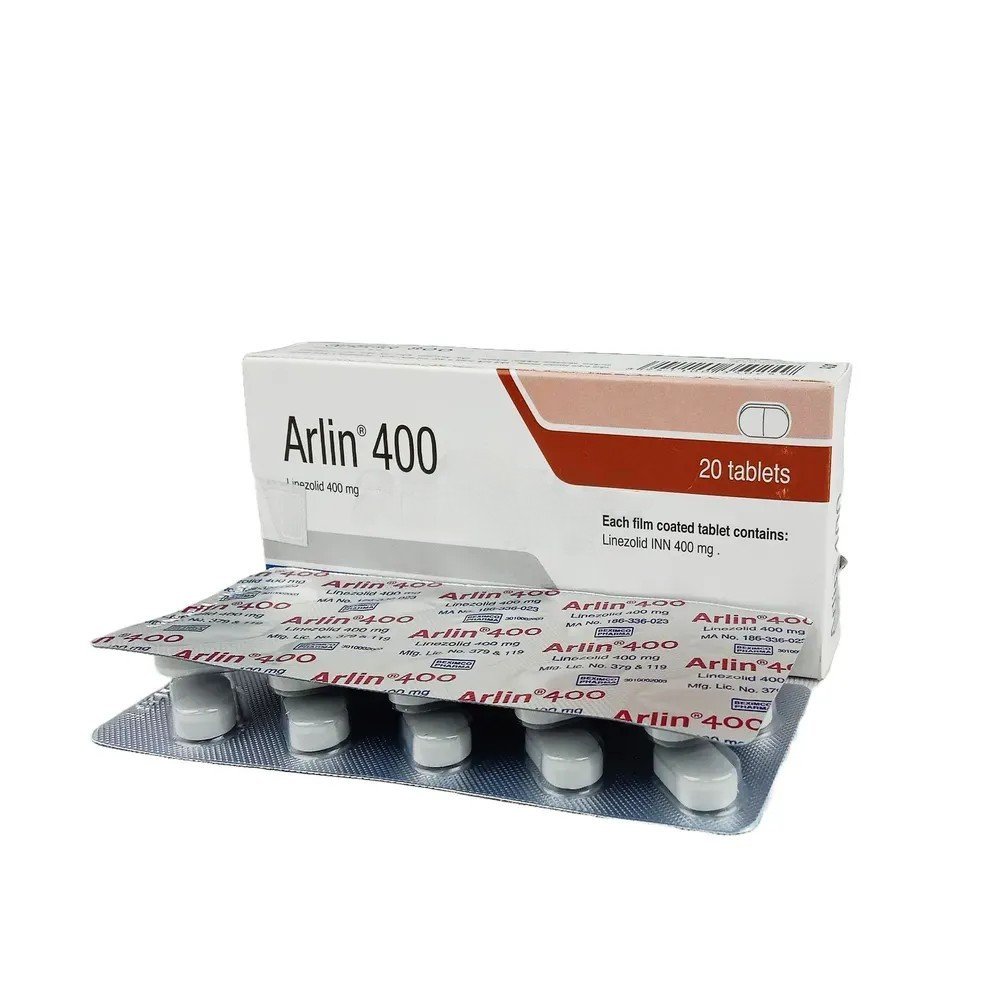

Medicine Overview of Arlin 400mg Tablet
Arlin 400 is an antibiotic medicine used in the treatment of severe bacterial infections. It is used to treat infections of lungs (Pneumonia), skin and soft tissues.
Arlin 400 may be taken with or without food, preferably at a fixed time. You should take it regularly as per the schedule prescribed by your doctor. Taking it at the same time every day will help you to remember to take it. Do not stop taking it until you have finished the complete course, even when you feel better. If you stop taking this medicine too early then infection may return or worsen.
The most common side effects of Arlin 400 include vomiting, headache, nausea, decreased blood cell counts and diarrhea. These are usually mild but let your doctor know if they bother you or last more than a few days.
Before using it, you should tell your doctor if you are allergic to any antibiotics or have any kidney or liver problems. You should also let your doctor know all other medicines you are taking as they may affect, or be affected by this medicine. Pregnant and breastfeeding mothers should consult their doctor before using it.
- Severe bacterial infections
- Vomiting
- Headache
- Nausea
- Decreased blood cells (red cells, white cells, and platelets)
- Diarrhea
Avoid Arlin 400 with tyramine-rich food such as cheese, smoked fish, meats and some types of beer.
-
Arlin 400 treats serious infections caused by certain types of bacteria.
-
Take it with food to avoid an upset stomach.
-
Do not skip any doses and finish the full course of treatment even if you feel better. Stopping it early may make the infection to come back and harder to treat.
-
Diarrhea may occur as a side effect but should stop when your course is complete. Inform your doctor if it doesn’t stop or if you find blood in your stools.
-
Avoid taking excessive cheese, processed meats, alcohol, or soy sauce while taking this medication as these may cause an excessive rise in your blood pressure.
-
Inform your doctor if you develop fever, shortness of breath, or any changes in your vision.
-
Do not take it for more than 14 days without consulting your doctor.
May be taken with or without food.
Oral
Uncomplicated skin and skin structure infections
Adult: 400 mg 12 hrly for 10-14 days.
Vancomycin-resistant Enterococcus faecium
Adult: 600 mg 12 hrly for 14-28 days.
Methicillin-resistant
Adult: 600 mg bid for 7-21 days.
Community-acquired pneumonia; Nosocomial pneumonia; Complicated skin and skin structure infections
Adult: 600 mg 12 hrly for 10-14 days.
Elderly: No dosage adjustment needed.
Hepatic impairment: Mild to moderate: No dosage adjustment needed.
Oral
For Pediatric Patients
Pneumonia, complicated skin infections, vancomycin resistant enterococci:
Birth–11 y: 30 mg/kg/day q8h
>11 y: 1,200 mg/day q12h
Uncomplicated skin infections:
Birth–5 y: 30 mg/kg/day q8h
5–11 y: 20 mg/kg/day q12h
>11–18 y: 1,200 mg/day q12h
Preexisting myelosuppression, renal impairment (CrCl < 30ml/min), uncontrolled hypertension, phaeochromocytoma, carcinoid syndrome, untreated hyperthyroidism, chronic infection, history of seizures, bipolar depression, schizophrenia or acute confusional states. Pregnancy and lactation. Monitor complete blood counts weekly. Give after haemodialysis. Not known if linezolid or metabolites removed during peritoneal dialysis.
Lactation: Unknown; use caution
>10%
Pediatrics
Diarrhea (7.8-10.8%)
1-10%
Headache (5.7-8.8%).Diarrhea (8.2-8.3%),Nausea (5.1-6.6%),Vomiting (2-4.3%),Dizziness (1.8-2.6%),Rash (1.1-2.3%),Vaginal moniliasis (1.1-1.8%),Taste alteration (1-1.8%),Oral moniliasis (0.5-1.7%),Abnormal LFTs (0.4-1.6%),Fungal infection (0.3-1.5%),Localized abdominal pain (1.2-1.3%),Tongue discoloration (0.3-1.3%),Generalized abdominal pain (0.9-1.2%)
Pediatrics
Vomiting (2.9-9.4%),Headache (0.9-6.5%),Anemia (5.6%),Thrombocytopenia (4.7%),Nausea (1.9-3.7%),Generalized abdominal pain (0.9-2.4%),Localized abdominal pain (0.5-2.4%),Loose stools (1.6-2.3%),Eosinophilia (0.4-1.9%),Pruritus, other than application site (0.8-1.4%),Vertigo (1.2%)
<1%
Lactic acidosis,Myelosuppression,Peripheral neuropathy,Disorder of optic nerve,Serotonin syndrome
Potentially Fatal: Reversible myelosuppression including anaemia, leukopenia, pancytopenia and thrombocytopenia (particularly if using > 10-14 days), transient ischaemic attacks, renal failure, Stevens-Johnson syndrome.
May reduce serum levels w/ rifampicin and phenytoin. May cause hypoglycaemia w/ insulin or oral antidiabetics. May increase risk of seizures w/ tramadol.
Potentially Fatal: Increased risk of serotonin syndrome w/ MAOIs, TCAs, SNRIs, or other serotonergic drugs (e.g. bupropion, vilazodone, mirtazapine, amoxapine, buspirone, maprotiline, meperidine, trazodone, nefazodone). Significant increase in BP w/ vasopressive agents (e.g. epinephrine, norepinephrine), sympathomimetic agents (e.g. pseudoephedrine) and dopaminergic agents (e.g. dopamine, dobutamine).



Reviews
Clear filtersThere are no reviews yet.