


Introduction
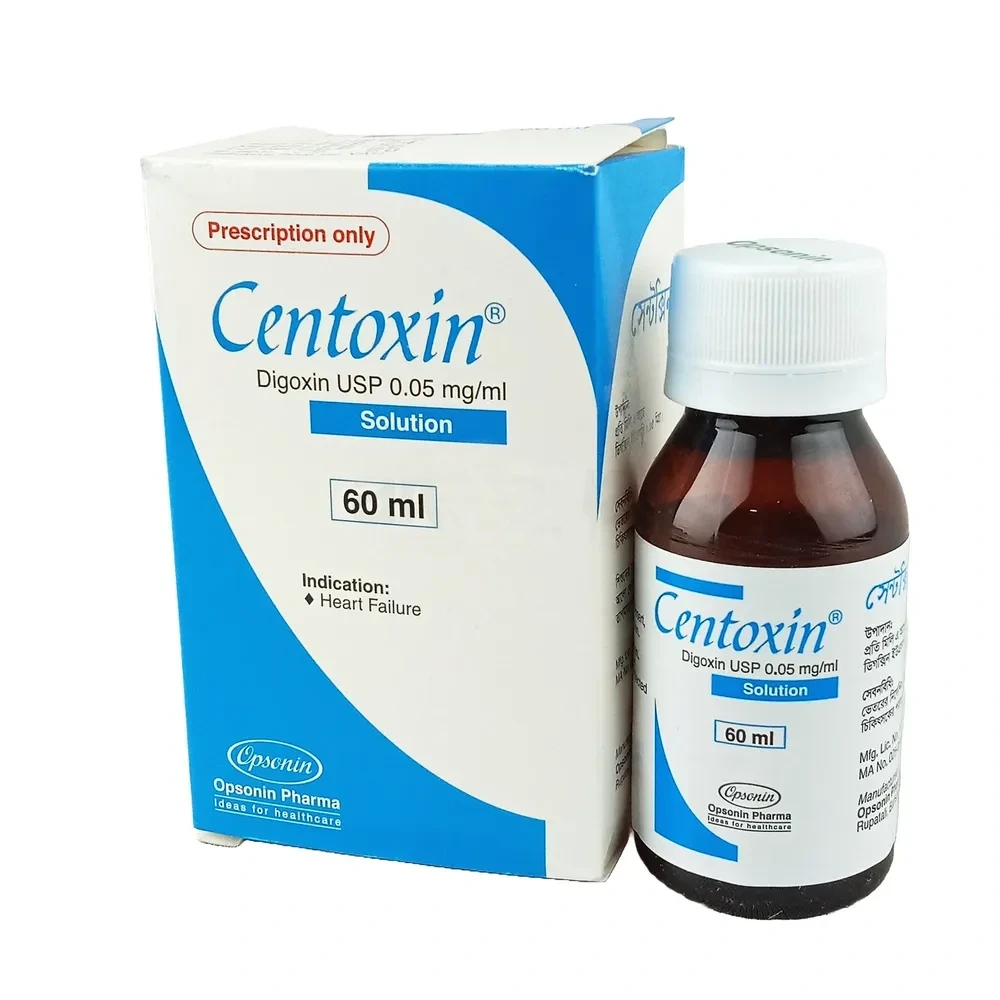
Centoxin is a medicine used for the treatment of heart failure in combination with other medicines. It helps to provide symptomatic relief by making the heart pump blood more efficiently. This medicine is also used to treat abnormal heart rhythm (arrhythmia). Centoxin restores and maintains a normal and steady heartbeat. It should be taken regularly as advised by the doctor. You may take it with or without food but it is better to take this medicine at a fixed time. This medicine should not be stopped abruptly without consulting the doctor as this can worsen your condition. Regular follow-up with your doctor is advised while using this medicine. Common side effects of this medicine include nausea, vomiting, diarrhea, dizziness, and visual disturbances. Consult your doctor if these effects bother you. This medicine is used with caution for some people. Thus, you must inform the doctor if you are suffering from any kidney disease. Also, let your doctor know if you are pregnant or breastfeeding and about all the other medications that you are taking regularly. Your doctor may advise for regular monitoring of kidney function while you are taking this medicine.
_
Uses of Centoxin
Heart failure
Arrhythmia
Side effects of Centoxin
Common
Visual impairment
Skin rash
Nausea
Vomiting
Diarrhea
Dizziness
Arrhythmia (irregular heartbeats)
How to use Centoxin
Take this medicine in the dose and duration as advised by your doctor. Swallow it as a whole. Do not chew, crush or break it. Centoxin may be taken with or without food, but it is better to take it at a fixed time.
How Centoxin works
Centoxin is a cardiac glycoside. It works by correcting irregular heartbeat to a normal rhythm and increases the force with which the heart muscle contracts with every heartbeat. This makes the heart pump more efficiently and increases blood circulation throughout the body.
What if you forget to take Centoxin?
If you miss a dose of Centoxin, skip it and continue with your normal schedule. Do not double the dose.
Quick Tips
Take Centoxin at the same time every day.
Notify your doctor about other medicines you’re taking to avoid drug interactions.
Symptoms of overdose include slow heartbeat, dizziness, lightheadedness and breathing problems.
Do not discontinue use without consulting your doctor even if you feel better. Stopping abruptly could worsen your condition.
Brief Description
Indication
Heart failure, Supraventricular arrhythmias, Atrial fibrillation and Atrial flutter
Administration
May be taken with or without food.
Adult Dose
Atrial Fibrillation Rapid digitalizing (loading-dose) regimen PO: 10-15 mcg/kg total loading dose; administer 50% initially; then may cautiously give 1/4 the loading dose q6-8hr twice; peform careful assessment of clinical response and toxicity before each dose Maintenance PO: 3.4-5.1 mcg/kg/day or 0.125-0.5 mg/day PO; may increase dose every 2 weeks based on clinical response, serum drug levels, and toxicity Heart Failure As per ACCF/AHA guidelines, a loading dose to initiate digoxin therapy in patients with heart failure is not necessary 0.125-0.25 mg PO/IV qDay; higher doses including 0.375-0.5 mg/day rarely needed Use lower end of dosing (0.125 mg/day) in patients with low lean body mass
_
Child Dose
Heart Failure/Atrial Fibrillation Use doses at the lower end of the spectrm when treating heart failure Reduce dose by 20-25% when changing from oral formulation or IM to IV therapy Premature neonate PO: 1st loading dose, 10-15 mcg/kg; 2nd and 3rd loading doses, 5-7.5 mcg/kg q6-8hr for 2 doses; maintenance: 5-7.5 mcg/kg/day divided q12hr Full-term neonate PO: 1st loading dose, 12.5-17.5 mcg/kg; 2nd and 3rd loading doses, 6.25-8.75 mcg/kg q6-8hr for 2 doses; maintenance: 6-10 mcg/kg/day divided q12hr Infants & children 1-24 months PO: 1st loading dose, 17.5-30 mcg/kg; 2nd and 3rd loading doses, 8.75-15 mcg/kg q6-8hr for 2 doses; maintenance: 10-15 mcg/kg/day divided q12hr 2-5 years PO: 1st loading dose, 15-20 mcg/kg; 2nd and 3rd loading doses, 8.75-10 mcg/kg q6-8hr for 2 doses; maintenance: 7.5-10 mcg/kg/day divided q12hr 5-10 years PO: 1st loading dose, 10-17.5 mcg/kg; 2nd and 3rd loading doses, 5-8.75 mcg/kg q6-8hr for 2 doses; maintenance: 5-10 mcg/kg/day divided q12hr >10 years & <100 kg PO: 1st loading dose, 5-7.5 mcg/kg; 2nd and 3rd loading doses, 2.5-3.75 mcg/kg q6-8hr for 2 doses; maintenance: 2.5-5 mcg/kg/day
_
Renal Dose
Use lower end of dosing (0.125 mg/day) in patients with impaired renal function
Contraindication
Digitalis toxicity, ventricular tachycardia/fibrillation, obstructive cardiomyopathy. Arrhythmias due to accessory pathways (e.g. Wolff-Parkinson-White syndrome).
Mode of Action
Digoxin is a cardiac glycoside which has positive inotropic activity characterized by an increase in the force of myocardial contraction. It also reduces the conductivity of the heart through the atrioventricular (AV) node. Digoxin also exerts direct action on vascular smooth muscle and indirect effects mediated primarily by the autonomic nervous system and an increase in vagal activity.
Precaution
Cardiac dysrhythmias, hypokalaemia, hypertension, IHD, hypercalcaemia, hypomagnesaemia, electroconversion, chronic cor pulmonale, aortic valve disease, acute myocarditis, congestive cardiomyopathies, constrictive pericarditis, heart block, elderly, renal impairment, abnormalities in thyroid function; pregnancy. IV digoxin can only be given to patients who have not received cardiac glycosides in the preceding 2 wk. Lactation: Drug enters breast milk; use with caution (American Academy of Pediatrics committee states, "compatible with nursing")
_
Side Effect
1-10% Dizziness (4.9%),Mental disturbances (4.1%),Diarrhea (3.2%),Headache (3.2%),Nausea (3.2%),Vomiting (1.6%),Maculopapular rash (1.6%) <1% Anorexia,Cardiac dysrhythmia,Arrhythmia in children (consider a toxicity) Frequency Not Defined Visual disturbance (blurred or yellow vision),Heart block (1°/2°/3°),Asystole,Tachycardia Potentially Fatal: Cardiac arrhythmias in combination with heart block.
_
Pregnancy Category Note
Pregnancy Experience with digoxin in pregnant women over several decades, based on published retrospective clinical studies and case reports, has not led to the identification of a drug associated risk of major birth defects, miscarriage or adverse maternal and fetal outcomes Untreated underlying maternal conditions (eg, heart failure, atrial fibrillation) during pregnancy pose a risk to the mother and fetus Clinical considerations Pregnant women with heart failure are at increased risk for preterm birth; clinical classification of heart disease may worsen with pregnancy and lead to maternal or fetal death Pregnant women with atrial fibrillation are at an increased risk of delivering a low birth weight infant; atrial fibrillation may worsen with pregnancy and can lead to maternal or fetal death Fetal/neonatal adverse reactions Digoxin has been shown to cross the placenta and is found in amniotic fluid Monitor neonates for signs and symptoms of digoxin toxicity, including vomiting, and cardiac arrhythmias Dose adjustments during pregnancy and the postpartum period Digoxin requirements may increase during pregnancy and decrease in the postpartum period Monitor serum digoxin levels during pregnancy and the postpartum period Labor or delivery Risk of arrhythmias may increase during labor and delivery Monitor patients continuously during labor and delivery Lactation The digoxin dose received through breastfeeding is up to 4% of the neonatal maintenance dosage, which is unlikely to be clinically relevant There are no data on the effects of digoxin on the breastfed infant or the effects on milk production
_
Interaction
Effectiveness reduced by phenytoin, neomycin, sulphasalazine, kaolin, pectin, antacids and in patients receiving radiotherapy. Metoclopramide may alter the absorption of solid dosage forms of digoxin. Blood levels increased by calcium channel blockers, spironolactone, quinidine and calcium salts. Potentially Fatal: Electrolyte imbalances such as hypokalaemia and hypomagnesemia (e.g. admin of potassium-losing diuretics, corticosteroids) can increase the risk of cardiac toxicity.
_


Reviews
Clear filtersThere are no reviews yet.