


Introduction
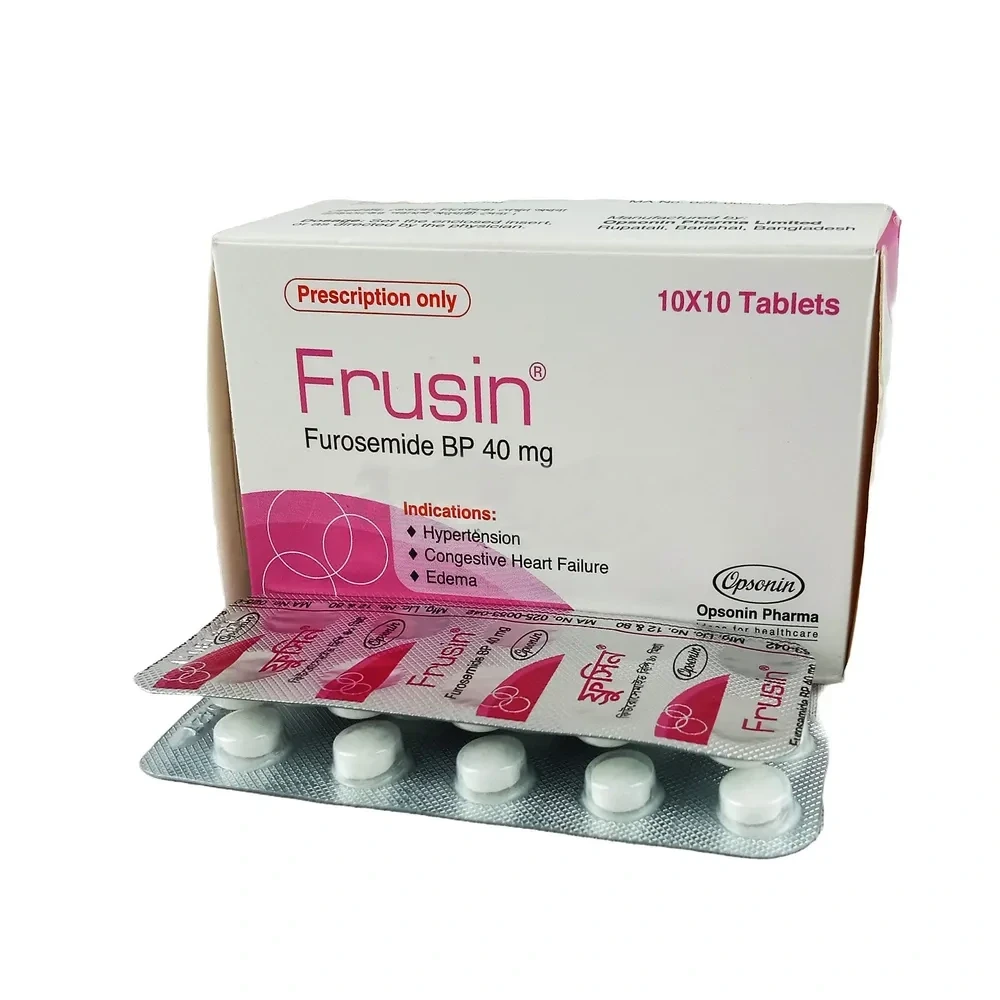
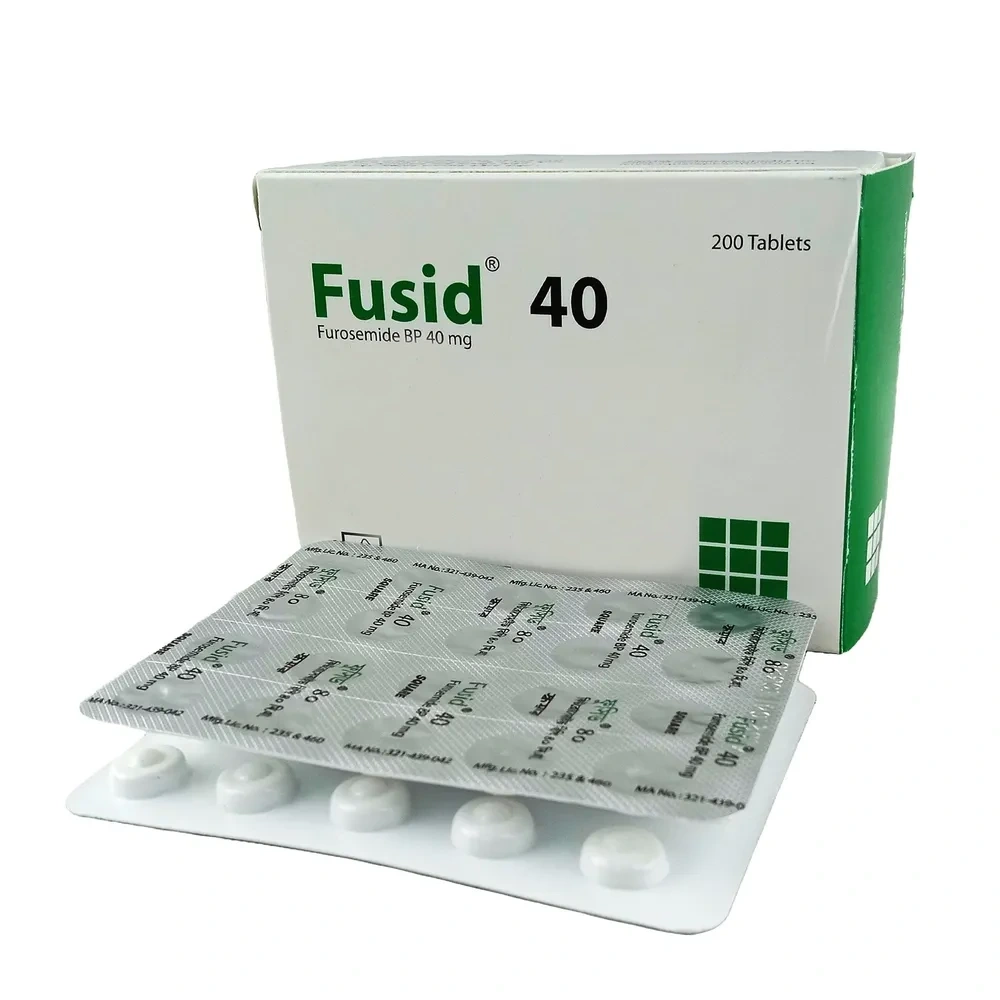
Frusin 40 belongs to a group of medicines called diuretics or water tablets. It is used to reduce the swelling (edema) caused by too much water in the body in people who have heart failure, liver or kidney disease. This medicine is also used to treat high blood pressure. Frusin 40 helps your body get rid of extra water and salt through urine. It may be used alone or in combination with other medicines as per the dose advised by your doctor. It can be taken with or without food and should be taken at the same time each day. It is best to avoid taking this medicine within 4 hours of your bedtime to prevent having to get up at night to urinate. It is important to continue taking this medication even if you feel well. If you stop taking it without consulting your doctor, your condition may worsen. Lifestyle changes like reducing stress, restricting salt intake, and stopping smoking may help this medicine work better. Common side effects of this medicine include headache, dizziness, dehydration, decreased blood pressure and stomach upset. These are usually mild and disappear after a short time. Consult your doctor if they bother you or do not go away. Before taking this medicine, let your doctor know if you have any liver problems. Pregnant or breastfeeding women should also consult their doctor before taking it. Regular monitoring of kidney function tests and electrolyte levels is important while using this medicine. It may reduce the potassium level in your blood so your doctor may ask you to add potassium-rich foods to your diet (such as bananas, coconut water, etc.) or prescribe supplements.
_
Uses of Frusin 40
Hypertension (high blood pressure)
Edema
Side effects of Frusin 40
Common
Dizziness
Weakness
Dehydration
Decreased potassium level in blood
Increased blood uric acid
Decreased magnesium level in blood
Increased thirst
How to use Frusin 40
Take this medicine in the dose and duration as advised by your doctor. Swallow it as a whole. Do not chew, crush or break it. Frusin 40 may be taken with or without food, but it is better to take it at a fixed time.
How Frusin 40 works
Frusin 40 is a diuretic. It removes extra water and certain electrolytes from the body by increasing the amount of urine produced.
What if you forget to take Frusin 40?
If you miss a dose of Frusin 40, take it as soon as possible. However, if it is almost time for your next dose, skip the missed dose and go back to your regular schedule. Do not double the dose.
Quick Tips
Take it in the morning with breakfast to avoid getting up at night to urinate.
Monitor your blood pressure after starting Frusin 40, and notify your doctor if it does not lower down.
Consult your doctor if you experience dizziness, tiredness, or muscle weakness that does not go away.
Take potassium supplements or potassium-rich diet (banana, spinach, coconut water, etc.) as Frusin 40 can decrease your potassium levels and lead to dehydration.
You may be asked to get regular blood tests done to monitor your kidney function.
Brief Description
Indication
Hypertension, Congestive heart failure, Nephrotic syndrome, Hypercalcemia, Edema, Cirrhosis, Renal impairment, Cerebral/pulmonary edema, Pulmonary oedema, Acute renal failure, Chronic renal failure
Administration
May be taken with or without food. May be taken w/ meals to reduce GI discomfort.
Adult Dose
Oral Resistant Hypertension Adult: 20-80 mg PO divided q12hr Edema Edema associated with congestive heart failure (CHF), liver cirrhosis, and renal disease, including nephrotic syndrome 20-80 mg PO once daily; may be increased by 20-40 mg q6-8hr; not to exceed 600 mg/day Elderly: Initially, 20 mg and titrate upward if needed. Parenteral Oedema associated with heart failure Adult: 20-40 mg IV/IM once; may be increased by 20 mg q2hr; individual dose not to exceed 200 mg/dose Refractory CHF may necessitate larger doses Acute Pulmonary Edema/Hypertensive Crisis/Increased Intracranial Pressure 0.5-1 mg/kg (or 40 mg) IV over 1-2 minutes; may be increased to 80 mg if there is no adequate response within 1 hour;not to exceed 160-200 mg/dose Hyperkalemia in Advanced Cardiac Life Support (ACLS) 40-80 mg IV Hypermagnesemia in ACLS 20-40 mg IV q3-4hr PRN Hepatic impairment: Monitor, especially with high dosages
_
Child Dose
Edema Infants and children: 1-2 mg/kg IV/IM/PO once initially; increased by 1-2 mg/kg q6-8hr (PO) or 1 mg/kg q2hr (IV/IM); individual dose not to exceed 6 mg/kg Neonates (<28 days): 0.5-1 mg/kg IV/IM q8-24hr; individual dose not to exceed 2 mg/kg Resistant Hypertension <1 year: Safety and efficacy not established 1-17 years: 0.5-2 mg/kg PO q24hr or q12hr; individual dose not to exceed 6 mg/kg/dose
_
Renal Dose
Acute renal failure: 1-3 g/day may be necessary to attain desired response; avoid use in oliguric states
Contraindication
Severe sodium and water depletion, hypersensitivity to sulphonamides and furosemide, hypokalaemia, hyponatraemia, precomatose states associated with liver cirrhosis, anuria or renal failure. Addison's disease.
Mode of Action
Furosemide inhibits reabsorption of Na and chloride mainly in the medullary portion of the ascending Loop of Henle. Excretion of potassium and ammonia is also increased while uric acid excretion is reduced. It increases plasma-renin levels and secondary hyperaldosteronism may result. Furosemide reduces BP in hypertensives as well as in normotensives. It also reduces pulmonary oedema before diuresis has set in.
Precaution
Prostatic hyperplasia. Hepatic or renal impairment, gout, DM, impaired micturition. Infusion rate should not exceed 4 mg/min to reduce the risk of ototoxicity. Monitor fluid and electrolyte balance and renal function. May lower serum levels of calcium and magnesium, thus serum levels should be monitored. Pregnancy and lactation. Lactation: Drug excreted into breast milk; use with caution; may inhibit lactation
_
Side Effect
>10% Hyperuricemia (40%), Hypokalemia (14-60%) Frequency Not Defined Hyponatraemia, hypochloraemic alkalosis, headache, drowsiness, muscle cramps, hypotension, dry mouth, thirst, weakness, lethargy, restlessness, oliguria, GI disturbances, hypovolaemia, dehydration, hyperuricaemia, acute generalised exanthematous pustulosis, drug rash w/ eosinophilia and systemic symptoms, reversible or irreversible hearing impairment, deafness, tinnitus, severe anaphylactic or anaphylactoid reactions (e.g. w/ shock), Stevens-Johnson syndrome, toxic epidermal necrolysis; increased liver enzyme, cholesterol and triglyceride serum levels. Potentially Fatal: Serious cardiac arrhythmias.
_
Pregnancy Category Note
Pregnancy category: C; treatment during pregnancy necessitates monitoring of fetal growth because of risk for higher fetal birth weights Lactation: Drug excreted into breast milk; use with caution; may inhibit lactation
_
Interaction
Analgesics reduce natriuretic action of furosemide. Antagonises hypoglycaemic agents and drugs used for gout. Hyperglycaemia with antihypertensive agent diazoxide. Antagonises muscle relaxants. Increased risk of ototoxicity when used with aminoglycosides especially in renal impairment. May enhance nephrotoxicity of cephalosporins. Effects of antihypertensives enhanced. Action antagonised by corticosteroids. Phenytoin and indometacin may reduce effects of furosemide. Potentially Fatal: May provoke severe hypotensive response with ACE inhibitors. NSAIDs inhibit diuretic and antihypertensive effects. Increased incidence of premature beats with cardiac glycosides.
_



Reviews
Clear filtersThere are no reviews yet.