




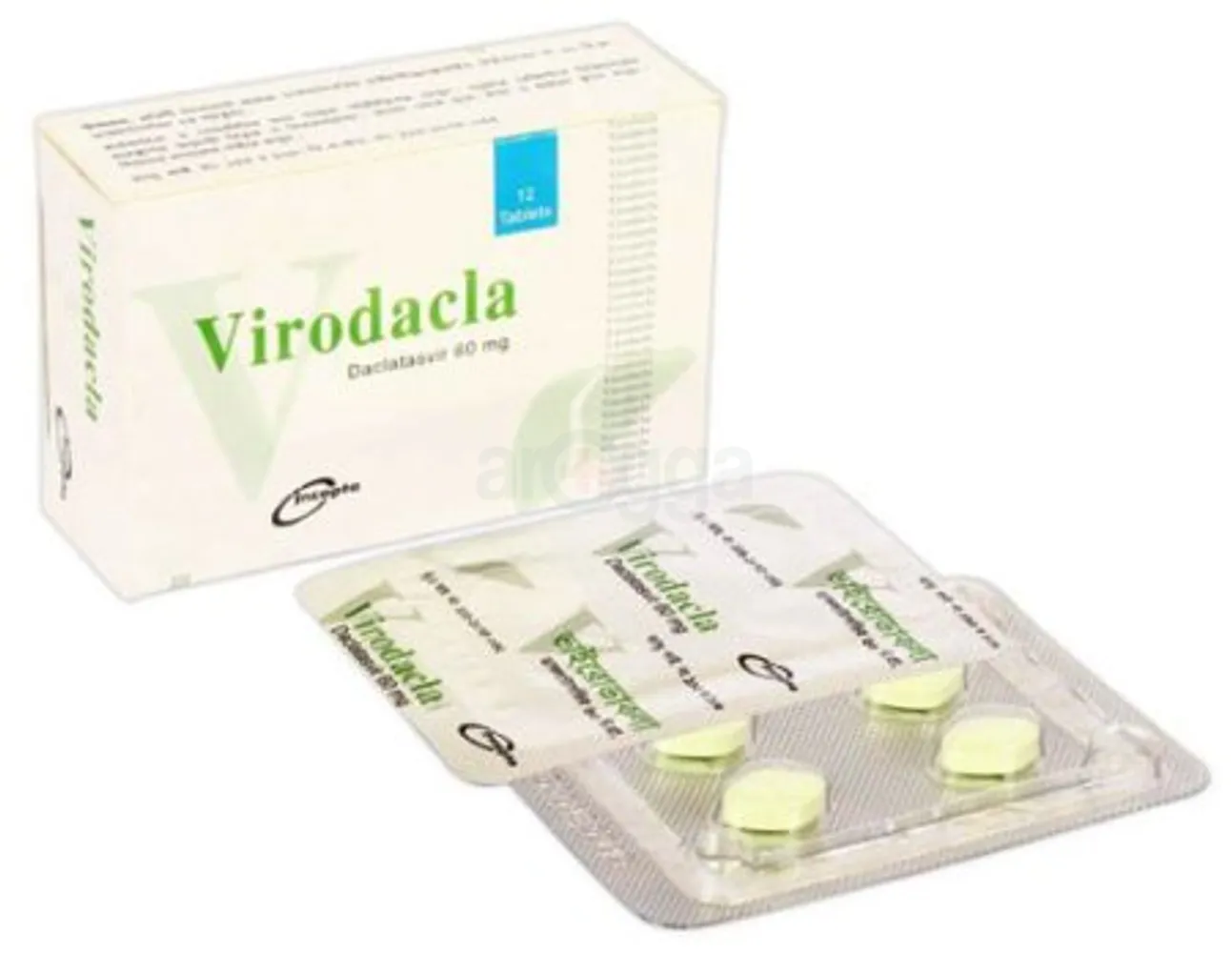
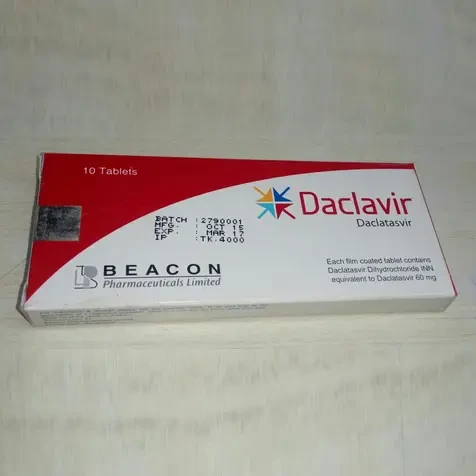
Medicine Overview of Dakovir-C 60mg Tablet
Dakovir-C 60 is an antiviral medication. It is used along with other medications for the treatment of chronic hepatitis C virus (HCV) infection. It works by lowering a load of hepatitis C virus in the body and removing the virus from the blood over a period of time.
Dakovir-C 60 should be taken in the dose and duration as advised by your doctor. It should be taken with or without food, preferably at a fixed time. Do not skip any doses and finish the full course of treatment even if you feel better If you miss a dose, take it as soon as possible. However, if it is almost time for your next dose, skip the missed dose and go back to your regular schedule. Do not double the dose.
It has fewer side effects as compared to other similar medicines, like fatigue, headache, nausea, insomnia (difficulty sleeping) and anemia (low red blood cell count). Inform your doctor if these side effects persist for a longer duration. Please consult your doctor if you are pregnant, planning to conceive or breastfeeding.
- Chronic hepatitis C virus (HCV) infection
- Fatigue
- Headache
- Nausea
- Insomnia (difficulty in sleeping)
- Anemia (low number of red blood cells)
-
Dakovir-C 60 is used along with other medications for the treatment of chronic hepatitis C virus (HCV) infection.
-
Do not skip any doses and finish the full course of treatment even if you feel better.
-
It has fewer side effects compared to other similar medications.
-
Take it with food, preferably at the same time everyday.
-
You will usually need to take this medicine every day for either 12 or 24 weeks.
-
It may cause fatigue, dizziness, and blurred vision. Don’t drive or do anything requiring concentration until you know how it affects you.
-
Your doctor may monitor your liver function and the amount of hepatitis C virus in your body regularly.
-
Do not stop taking Dakovir-C 60 without your doctor’s advice.
Hepatitis C
Indicated for use with sofosbuvir for chronic hepatitis C virus (HCV) genotypes 1 and 3 infection
Genotype 1
Without cirrhosis or with compensated (Child-Pugh A) cirrhosis: 60 mg (plus sofosbuvir 400 mg) PO qDay for 12 weeks
Decompensated (Child-Pugh B or C) cirrhosis or posttransplant: 60 mg (plus sofosbuvir 400 mg) PO qDay plus ribavirin for 12 weeks
Genotype 3
Without cirrhosis: 60 mg (plus sofosbuvir 400 mg) PO qDay for 12 weeks
Compensated (Child-Pugh A) or decompensated (Child-Pugh B or C) cirrhosis, or posttransplant: 60 mg (plus sofosbuvir 400 mg) PO qDay plus ribavirin for 12 weeks
Hepatic impairment (any degree): No dose adjustment required
Hypersensitivity. Co-administration w/ strong CYP3A4 inducers & P-gp eg phenytoin, carbamazepine, oxcarbazepine, phenobarb, rifampicin, rifabutin, rifapentine, systemic dexamethasone, St. John’s wort.
Inhibits NS5A, a nonstructural protein encoded by HCV.
Binds to the N-terminus within domain 1 of NS5A, which may cause structural distortions that interfere with NS5A functions, and thereby inhibits both viral RNA replication and virion assembly.
Patients w/ genotype 1 infection & compensated cirrhosis; receiving amiodarone; decompensated liver disease; prior exposure to a NS5A inhibitor; pre-, peri- or post-liver transplant or other organ transplant; HIV/HCV, HBV co-infected patients.
Rare hereditary problems of galactose intolerance, Lapp lactase deficiency or glucose-galactose malabsorption. May impair ability to drive or operate machinery. Women of childbearing potential. Pregnancy & lactation. Childn & adolescents <18 yr.
Lactation
Unknown if distributed in human breast milk
>10%
Headache (14%),Fatigue (14%)
1-10%
Nausea (8%),Diarrhea (5%),Elevated lipase, >3 x ULN (2%)
Pregnancy
No data in pregnant women are available
If daclatasvir and sofosbuvir are administered with ribavirin, the warnings and precautions for ribavirin, in particular the pregnancy avoidance warning, apply to this combination regimen (see ribavirin prescribing information)
Lactation
Unknown if distributed in human breast milk
The development and health benefits of breastfeeding should be considered along with the mother’s clinical need for the drug and any potential adverse effects on the breastfed infant from the drug or from the underlying maternal condition
May lead to lower exposure & loss of efficacy w/ phenytoin, carbamazepine, oxcarbazepine, phenobarb, rifampicin, rifabutin, rifapentine, systemic dexamethasone & St. John’s wort. Decreased plasma levels & therapeutic effect w/ strong or moderate CYP3A4 & P-gp inducers. Increased plasma levels w/ strong CYP3A4 inhibitors. May increase systemic exposure of P-gp, OATP, 1B1, OCT1 or BCRP substrates. Boceprevir, telaprevir, atazanavir/ritonavir, efavirenz, cobicistat-containing, clarithromycin, telithromycin, erythromycin, dabigatran, etexilate, posaconazole, voriconazole, amiodarone, digoxin, Ca channel blockers, HMG-CoA reductase inhibitors.



Reviews
Clear filtersThere are no reviews yet.