


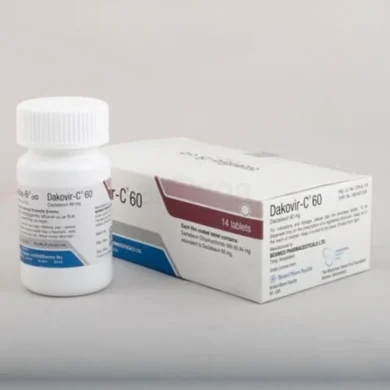


Medicine Overview of Avifix 250mg Tablet
Avifix is an antiviral or antiretroviral medicine. It is used in the treatment of HIV infection. It stops the virus from producing new viruses and clears up your infection.
Avifix should be taken with food, as this increases the absorption of the medicine into the body. You should take it in the dose and duration as advised by your doctor. Taking it at the same time every day will help you to remember to take it. Do not stop taking it until you have finished the complete course, even when you feel better. If you stop taking this medicine too early then infection may return or worsen.
Some people may experience headache, dizziness, nausea, vomiting, and diarrhea as side effects of this medicine. Please consult your doctor if these side effects persist for a longer duration. Inform your doctor if you have diabetes as it can increase sugar levels in the blood.
Before using it, you should tell your doctor if you are allergic to any antibiotics or have any kidney or liver problems. You should also let your doctor know all other medicines you are taking as they may affect, or be affected by this medicine. Pregnant and breastfeeding mothers should consult their doctor before using it. Your doctor may monitor your liver function while taking this medication.
- HIV infection
- Rash
- Headache
- Dizziness
- Vomiting
- Crystals in urine
- Nausea
- Abdominal pain
- Indigestion
- Paresthesia (tingling or pricking sensation)
- Throat pain
- Increased liver enzymes
- Diarrhea
- Blood in urine
- Peripheral neuropathy (tingling and numbness of feet and hand)
- Cough
- Taste change
- Hypercholesterolemia (high cholesterol)
- Increased triglyceride level in blood
- Protein in urine
-
Avifix should be taken with food.
-
Do not skip any doses and finish the full course of treatment even if you feel better.
-
It may cause dizziness or sleepiness. Do not drive or do anything that requires concentration until you know how it affects you.
-
Your doctor may check your liver function regularly. Inform your doctor if you develop abdominal pain, loss of appetite darkened urine or yellowing of the eyes or skin (jaundice).
-
Inform your doctor if you are pregnant, planning pregnancy or breastfeeding.
Oral
HIV infection
Adult: Combined with other antiretrovirals: 1.25 g bid or 0.75 g tid.
Hepatic Impairment
Mild impairment (Child-Pugh class A): Dose adjustment not necessary
Severe impairment (Child-Pugh Class B or C): Not recommended
Oral
HIV infection
Child: Combined with other antiretrovirals:
2-13 yr: 45-55 mg/kg bid or 25-35 mg/kg tid. Max: 0.75 g tid.
Max Dosage: Child: 0.75 g tid.
Renal Impairment
Dose adjustment not necessary
Pregnancy. Hepatic and renal impairment; haemophilia A or B; diabetes. Monitor for signs of lipodystrophy.
Lactation: HIV+ women are advised not to breastfeed
>10%
Diarrhea (14-20%)
1-10%
Nausea (3-7%),Flatulence (1-5%),Abdominal pain (1%),Anemia (1%),Allergic reaction (1%),Impaired concentration (1%),Lipodystrophy (1%),Metabolic acidosis (1%),Rash (1-3%),Leukopenia (1%),Thrombocytopenia (1%),Weakness (1%)
<1%
QTc prolongation,Torsades de pointes,Diabetes mellitus, new onset and exacerbation,Hyperglycemia
Reduced levels/effects with antacids, phenobarbital, carbamazepine, aminoglutethimide, phenytoin, rifampicin, nafcillin, nevirapine, omeprazole, nevirapine. Increased serum levels/effects with azole antifungal agents, cimetidine, efavirenz. Increased serum levels/effects of azithromycin, calcium channel blockers, clarithromycin, corticosteroids (e.g. fluticasone), mirtazapine, nateglinide, nefazodone, ciclosporin, sirolimus, tacrolimus, venlafaxine, eplerinone, fentanyl, atorvastatin, phosphodiesterase-5 (PDE-5) inhibitors, rifabutin, trazodone, TCAs. Reduced serum levels/effects of hormonal contraceptives, methadone, theophylline derivatives.
Potentially Fatal: Increased serum levels/toxicity of amiodarone, cisapride, pimozide, midazolam, triazolam, ergot alkaloids, lovastatin, simvastatin, quinidine.



Reviews
Clear filtersThere are no reviews yet.