


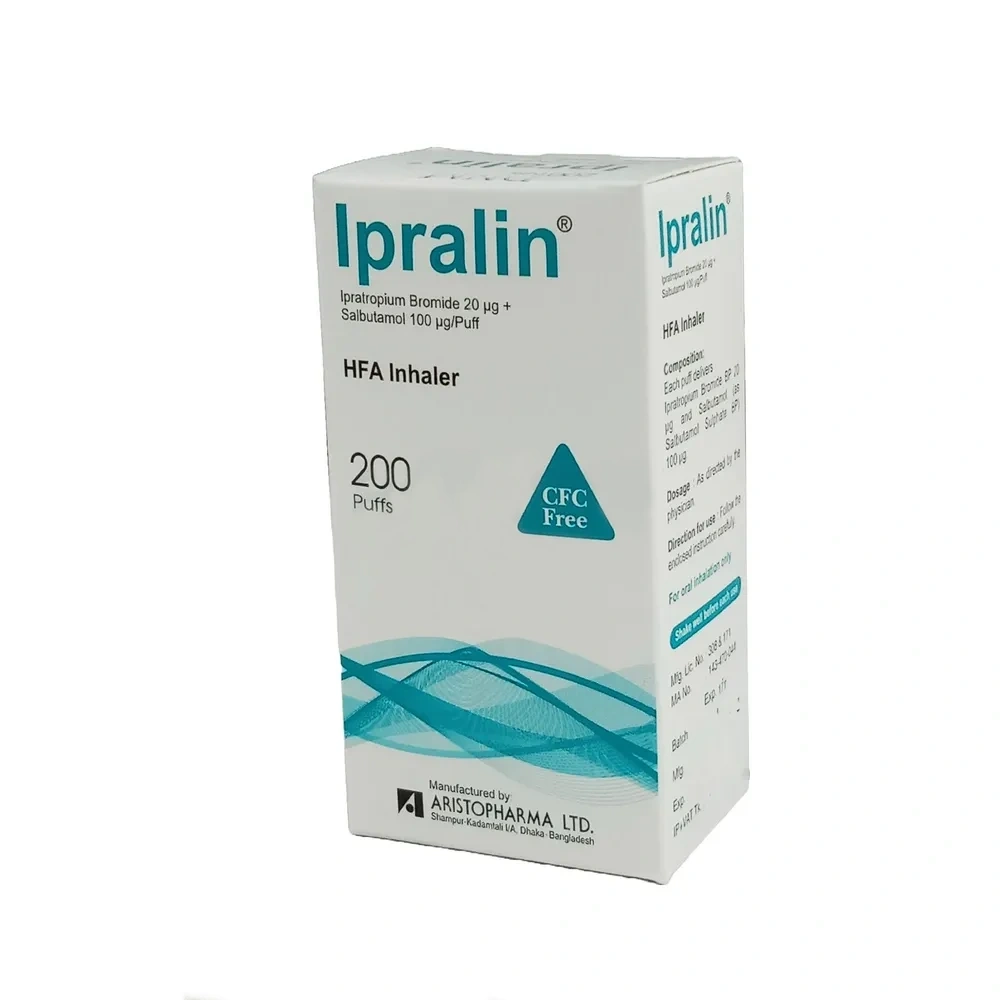

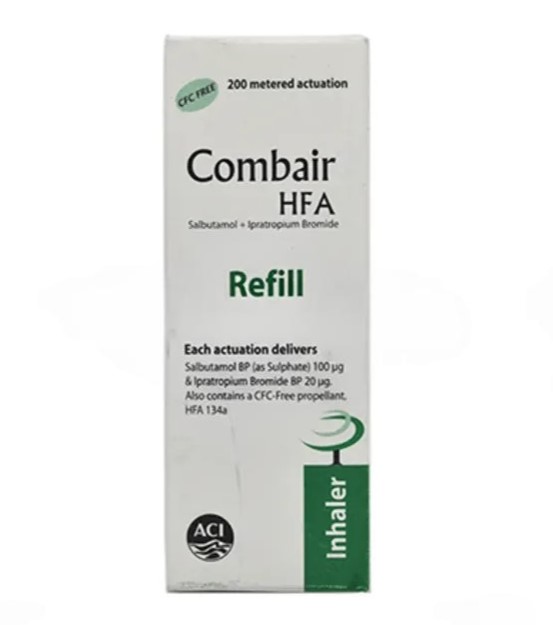
Medicine Overview of Ipralin HFA 20mcg+100mcg/puff Inhaler
- Chronic obstructive pulmonary disease (COPD)
- Dryness in mouth
- Breathlessness
- Cough
- Tremor
- Headache
- Palpitations
- Muscle cramp
-
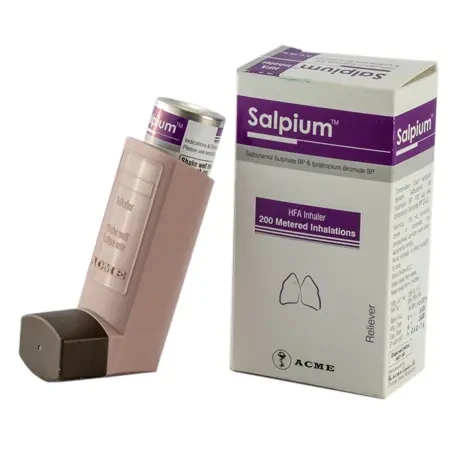
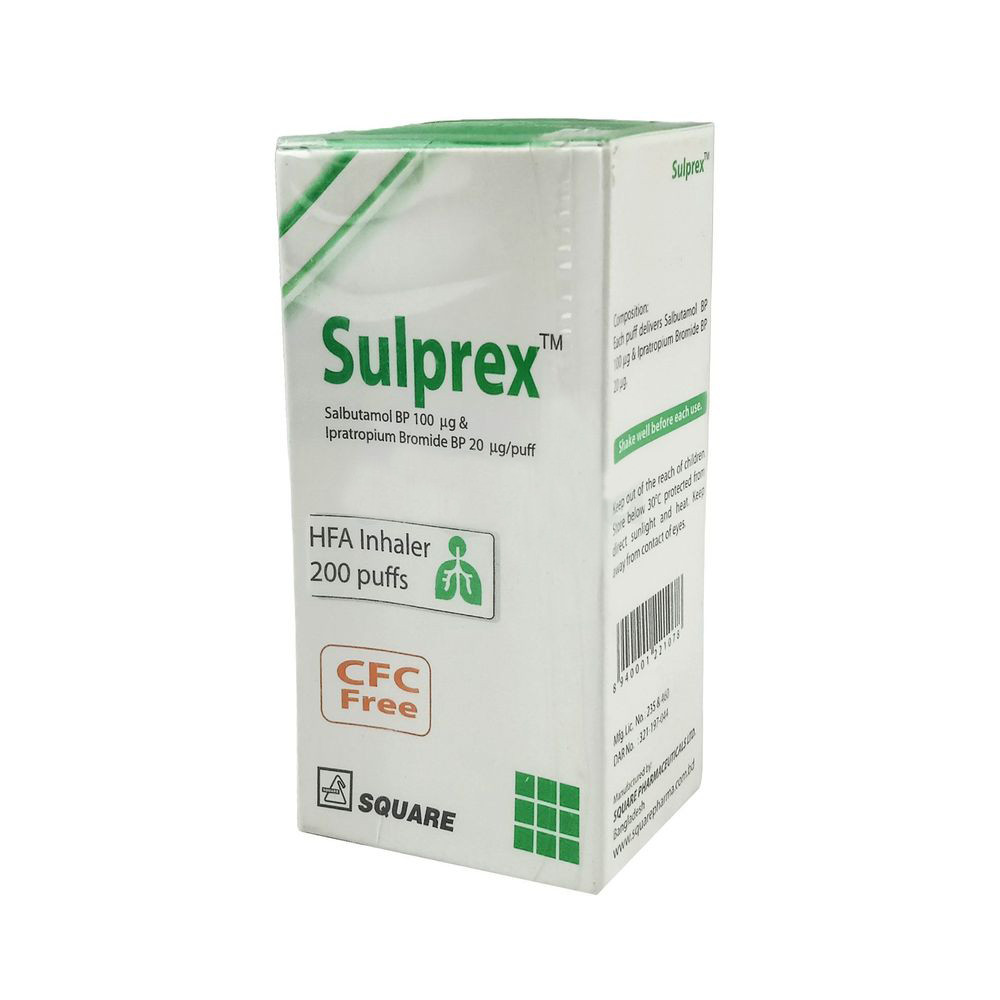
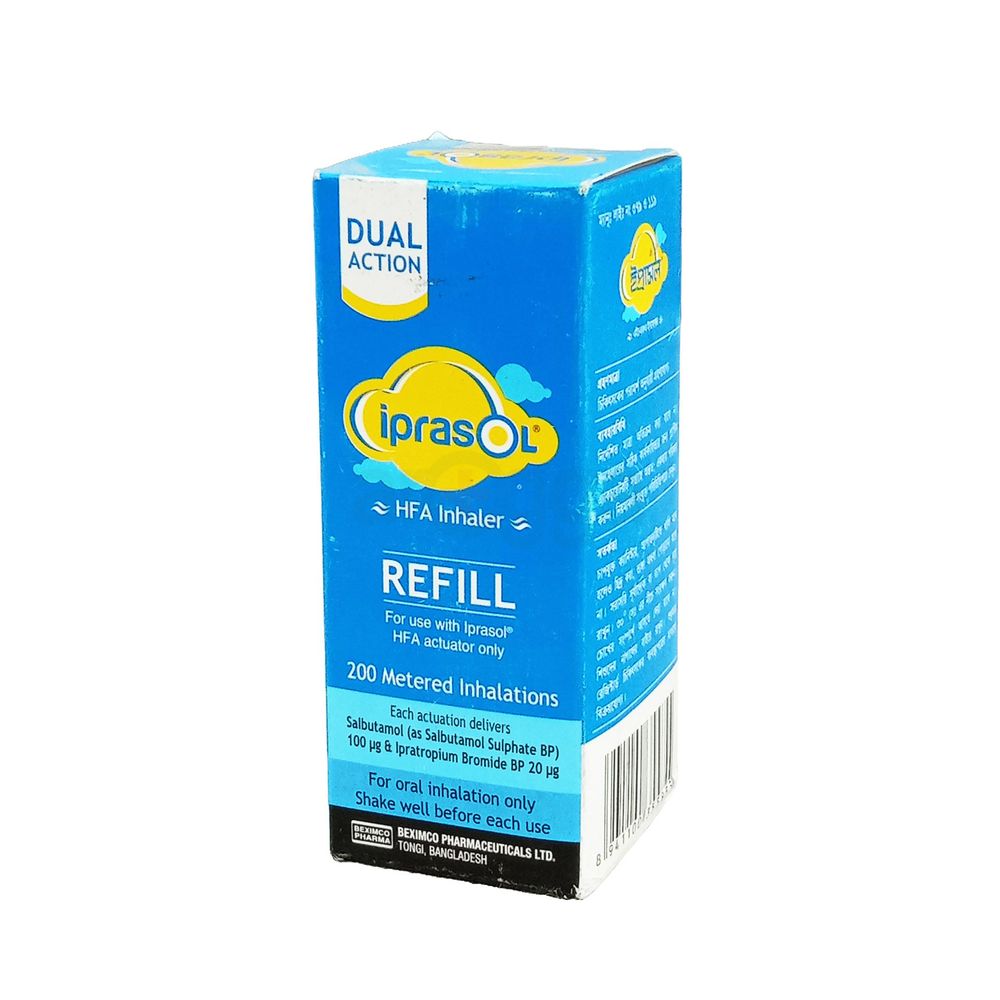
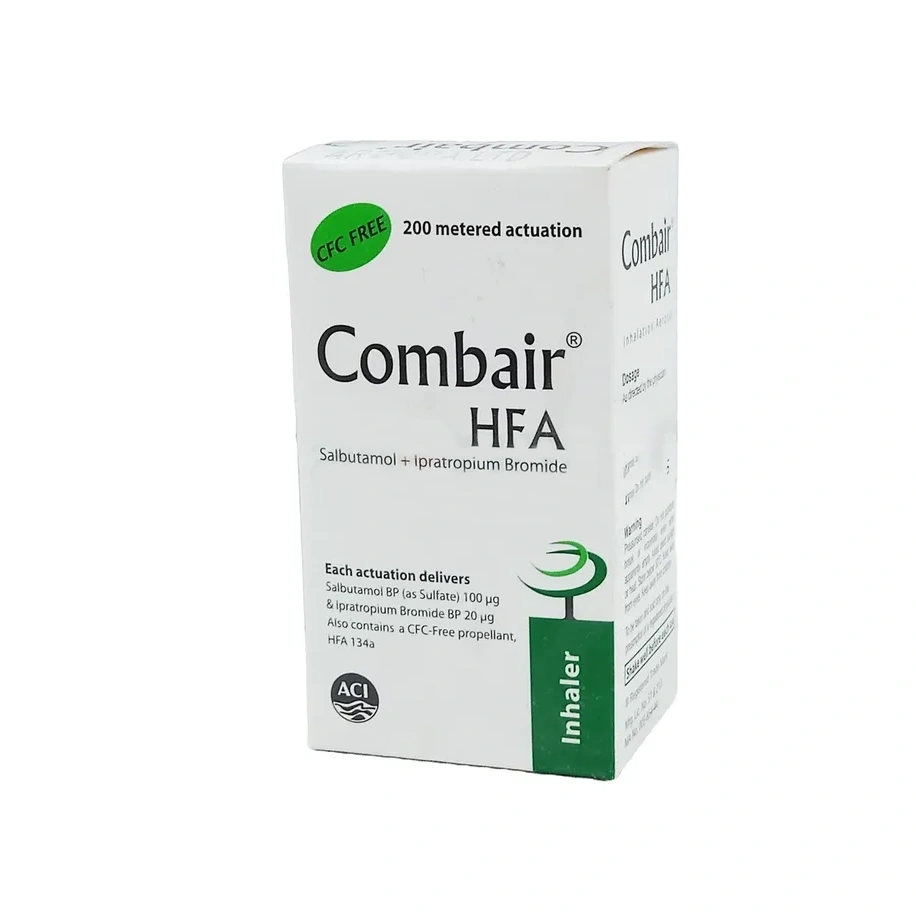
Ipralin HFA is a combination of two medicines that makes breathing easier for patients with chronic obstructive pulmonary disease (COPD).
-
This medicine is for inhalation only. The tablet should not be swallowed.
-
It should be taken at the same time each day.
-
It does not work right away and should not be used to relieve sudden breathing problems. Use your rescue inhaler to control sudden difficulty in breathing.
-
Dry mouth may occur as a side effect. Frequent mouth rinses, good oral hygiene, increased water intake and sugarless candy may help.
-
Gargle with warm water after each inhalation to avoid any fungal infections in your mouth and throat.
-
Take the first dose of this medicine under medical supervision as it may cause wheezing or tightening of the airways (bronchospasm) immediately after using.
-
Your doctor may regularly monitor your blood potassium level as low oxygen level in the blood (hypoxia) and medicines such as Ipralin HFA can lower blood potassium level.
-
Only miniscule amounts of Ipralin HFA may get absorbed into the bloodstream after inhalation. Hence, serious side effects are unlikely.
Chronic obstructive pulmonary disease
Adult: Inhalation: 100 mcg/20 mcg (1 actuation of metered-dose inhaler) q6hr; not to exceed 6 actuations/day
Nebulizer solution: Initially, 3 ml every 6 hr. Max: 3 ml every 4 hr.
One ampoule as required for the relief of symptoms or as directed. Up to three to four ampoules daily.
Bronchitis (2-12%)
1-10%
Upper respiratory tract infection (1-10%),Lung disease (6%),Headache (3-6%),Dyspnea (2-5%),Nasopharyngitis (4%),Cough (3-4%),Pharyngitis (2-4%),Pain (1-3%),Chest pain (2.6%),Sinusitis (2.3%),Nausea (1-2%),Diarrhea (1.8%),Urinary tract infection (1.6%),Influenza (1.4%),Leg cramps (1.4%),Nausea (1.4%),Pneumonia (1.4%),Rhinitis (1.1%)
<1%
Allergic-type reactions, such as skin reactions (eg, rash, pruritus, urticaria [including giant urticaria]), angioedema (eg, of tongue, lips, face), laryngospasm, and anaphylaxis
Angina,Arrhythmia,Arthralgia,Dizziness,Dry mouth,Dyspepsia,Dysphonia,Edema,Fatigue,Hypertension,Insomnia,Nervousness,Palpitation,Paresthesia,Tachycardia,Tremor,Vomiting
Potentially Fatal: Anaphylactic reactions such as angioedema of tongue, lips or face and laryngospasm.





Reviews
Clear filtersThere are no reviews yet.