


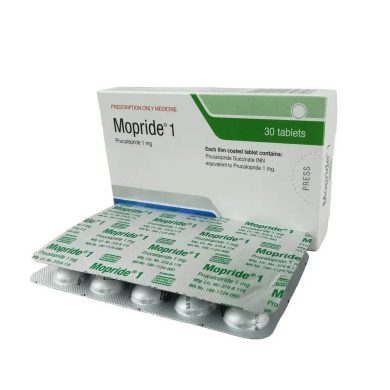


Medicine Overview of Mopride 2mg Tablet
Mopride 2 is a prescription medicine used in the treatment of constipation. It increases the release of certain chemical that improves the movement of food inside the intestine and helps to increase gastric emptying of both liquid and solid.
Mopride 2 is taken with or without food in a dose and duration as advised by the doctor. The dose you’re given will depend on your condition and how you respond to the medicine. You should keep taking this medicine for as long as your doctor recommends. If you stop treatment too early your symptoms may come back and your condition may worsen. Let your doctor know about all other medications you are taking as some may affect, or be affected by this medicine.
The most common side effects are headache, nausea, and abdominal pain. Most of these are temporary and usually resolve with time. Contact your doctor straight away if you are at all concerned about any of these side effects. This medicine may cause diarrhea, so it is better to take plenty of fluids while taking this medicine as it may help to prevent dehydration.
Before taking it, you should tell your doctor if you have any kidney or liver diseases so that your doctor can prescribe a suitable dose for you. You should avoid this medicine if you are suffering from bleeding ulcers of the stomach. Consult with your doctor if are pregnant or breastfeeding.
- Constipation
- Headache
- Nausea
- Diarrhea
- Abdominal pain
-
Mopride 2 helps treat chronic constipation and improve bowel movements, when laxatives have failed to provide adequate relief.
-
It can be taken with or without food, at any time of the day.
-
It may cause diarrhea. Drink plenty of water and inform your doctor if it bothers you.
-
Inform your doctor if your constipation has not improved even after four weeks of taking this medication.
Oral
Chronic idiopathic constipation
Adult: 2 mg once daily.
Elderly: Initially, 1 mg once daily, may increase to 2 mg once daily if necessary.
Hepatic Impairment
Severe (Child-Pugh Class C): Initially, 1 mg once daily, may increase to 2 mg once daily if necessary.
Severe (GFR <30 mL/min/1.73 m2): 1 mg once daily.
Patient on dialysis: Contraindicated.
Patient w/ history of arrhythmias or ischaemic CV disease, severe and unstable concomitant disease (e.g. cancer, AIDS, neurological or psychiatric, pulmonary, IDDM or other endocrine disroders). Severe hepatic (Child-Pugh Class C) and renal (GFR <30 mL/min/1.73 m2) impairment. Elderly.
This drug may cause dizziness and fatigue, if affected, do not drive or operate machinery.
Monitoring Parameters: Monitor bowel movement frequency.
Nervous: Headache, dizziness, fatigue, malaise, tremors.
CV: Palpitations.
GI: Nausea, abdominal pain and distention, diarrhoea, vomiting, flatulence, dyspepsia, anorexia, rectal bleeding, gastroenteritis.
Genitourinary: Polyuria, pollakiuria.
Musculoskeletal: Muscle spasm.
Others: Fever.












Reviews
Clear filtersThere are no reviews yet.