



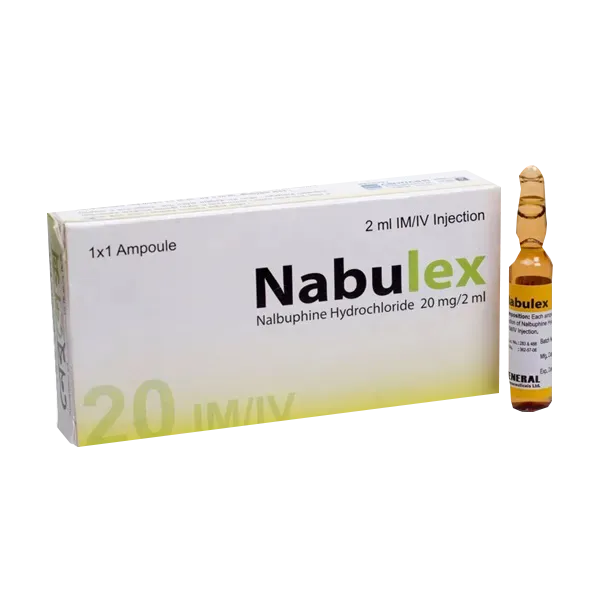
Medicine Overview of Nalbutin 2 20mg/2ml Injection
Nalbutin 2 is a pain relieving medicine. It is used to treat moderate to severe pain. It is also used as a premedication before surgery. This medicine is generally used when alternative medicines are ineffective or inadequate.
Nalbutin 2 is generally administered by a healthcare professional. You should not self-administer this medicine at home. The dose and duration will depend on what you are taking it for and how well it helps your symptoms.
The most common side effects of this medicine include injection site reactions (such as pain, redness, and swelling), nausea, vomiting, sweating a lot, and tiredness. If any of these side effects persist or get worse, you should let your doctor know. Your doctor may be able to suggest ways of preventing or reducing the symptoms.
Before using it, you should let your doctor know if you have a history of stomach ulcers, heart diseases, high blood pressure, and liver or kidney disease. Let your doctor also know about all the other medicines you are taking because they may affect, or be affected by, this medicine.
If you are pregnant or breastfeeding, it is important to ask the advice of your doctor before taking this medicine. Your doctor may also regularly monitor your kidney function, liver function, and levels of blood components if you are taking this medicine for long-term treatment.
Show less
- Moderate to severe pain
- Headache
- Dizziness
- Sleepiness
- Vomiting
- Nausea
- Constipation
-
Use Nalbutin 2 as instructed by your doctor. Never take in greater amounts or more often than prescribed.
-
It causes sleepiness or drowsiness. If this happens to you, do not drive or use machinery.
-
Avoid consuming alcohol when taking the Nalbutin 2, as it may cause excessive sleepiness or drowsiness.
-
Inform your doctor if you have ever been diagnosed with kidney or liver problems.
-
Store opioid pain relievers in a safe place and out of reach of others.
May impair ability to drive or operate machinery. Emotionally unstable patients or patients with history of opiate abuse; closely monitor these patients during long-term therapy. Impaired respiration due to other drugs, uraemia, bronchial asthma, severe infection, cyanosis, respiratory obstruction. MI patients who exhibit nausea and vomiting and in those about to undergo biliary tract surgery. Head injury, intracranial lesions or pre-existing increased intracranial pressure. Renal or hepatic impairment. Elderly and debilitated patients. Pregnancy and lactation.
Lactation: Insignificant amount distributed in milk; use with caution
Show less
>10%
Sedation (36%)
1-10%
Clamminess (9%),Nausea and vomiting (6%),Dizziness (5%),Xerostomia (4%),Headache (3%)
<1%
Asthma,Bradycardia,Burning,Dyspnea,Hypertension,Hypotension,Itching,Miosis,Pulmonary edema,Respiratory depression,Tachycardia,Urticaria,Vertigo
Potentially Fatal: Anaphylactic or anaphylactoid and other serious hypersensitivity reactions e.g. shock, respiratory distress, respiratory arrest, bradycardia, cardiac arrest, hypotension, laryngeal oedema.
Show less




Reviews
Clear filtersThere are no reviews yet.