

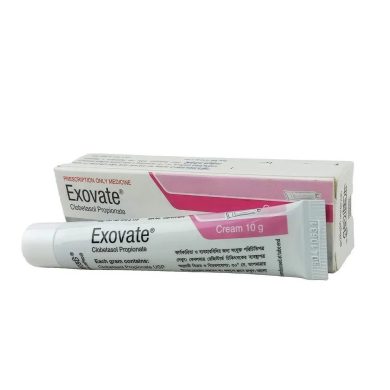

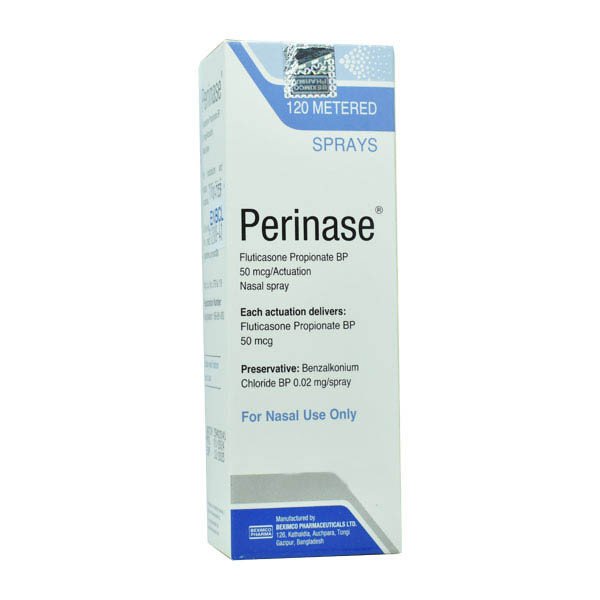

Medicine Overview of Perinase 50mcg/spray Nasal Spray
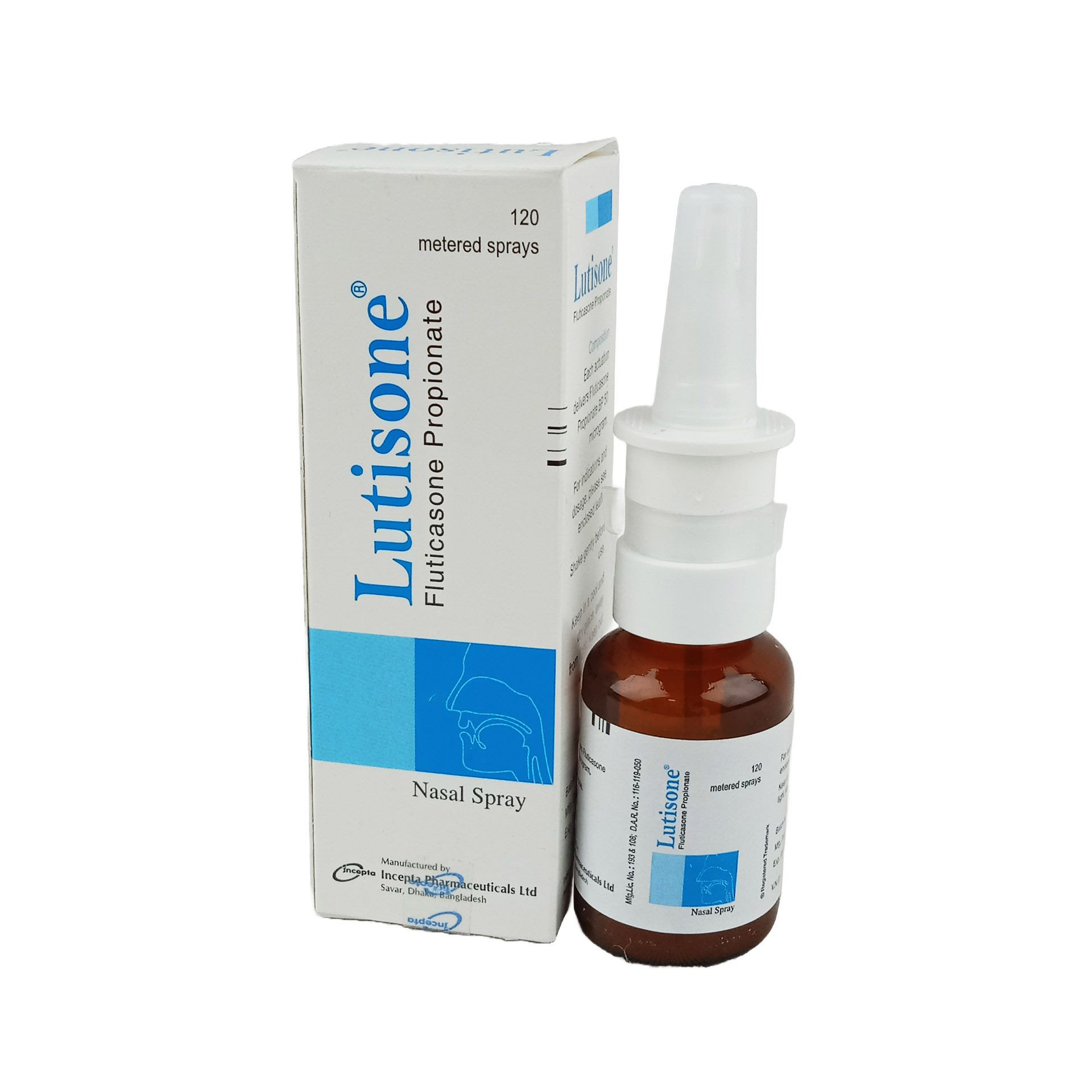
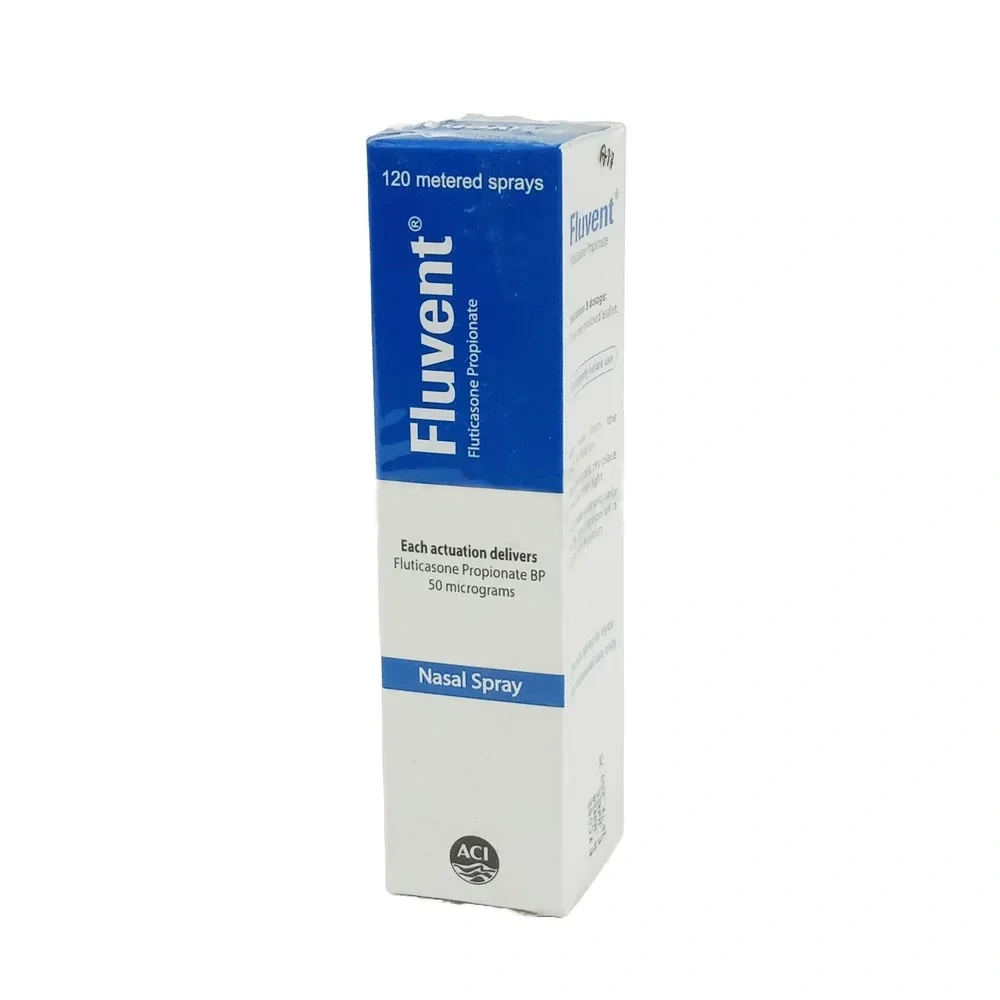
Perinase is a steroid. It relieves the symptoms of allergic rhinitis such as runny nose, sneezing and sinus discomfort. It works by blocking the production of certain chemical messengers that cause inlammation (swelling) and allergies, thus relieving the discomfort and irritation in your nose.
You should always use Perinase as advised by your doctor. To get the full benefit of the medicine you should take it regularly. Normally, you should blow your nose gently before using it, keep one nostril closed while applying the medicine into the other and then sniff hard to make sure it reaches deep into the nose. Then repeat for the other nostril.
Nasal irritation is very common side effect of this medicine. It may also cause nosebleed and headache in some patients. Talk to your doctor if you are worried about side effects or they do not go away. Using corticosteroids like this medicine make you more susceptible to viral infections, so you should stay away from people who have these infections. In general, you should try to avoid situations which make your symptoms worse (things like pollen and dust mites) and it’s best not to smoke.
Before using this medicine, you should let your doctor know if you are pregnant or breastfeeding. It is important to discuss the risks and benefits with your doctor. If you use this medicine for a long time, your doctor may want to carry out certain medical tests to check your progress.
- Sneezing and runny nose due to allergies
- Nasal irritation
-
The right way to use the nasal spray:
-
Avoid deep breathing as it will cause medication to go back to the throat and make it less effective.
-
Do not share the bottle with anyone else so that you do not spread germs.
-
Perinase should be avoided in patients with recent nasal ulcers, nasal surgery, or nasal trauma.
Nasal
Allergic rhinitis
Adults: 2 sprays(100mcg) in each nostril once a day, preferably in the morning. In some cases 2 sprays into each nostril twice daily, not exceeding 4 sprays.
Nasal polyps
Adult: 4 sprays (200 mcg) into each nostril 1-2 times daily for at least 4-6 wk.
Nasal
Allergic rhinitis
Children over 12 years: 2 sprays(100mcg) in each nostril once a day, preferably in the morning. In some cases 2 sprays into each nostril twice daily, not exceeding 4 sprays.
Children under 12 years (4 – 11 Years): 1 spray (50mcg) in each nostril once a day. The maximum total daily dosage should not exceed 4 sprays.
Nasal polyps
Child: >16 yr 4 sprays (200 mcg) into each nostril 1-2 times daily for at least 4-6 wk.
Rarely, immediate hypersensitivity reactions or contact dermatitis may occur after the administration of Fluticasone Propionate nasal spray. Rare instances of wheezing, nasal septum perforation, cataracts, glaucoma and increased intraocular pressure have been reported following the intranasal application of corticosteroids, including Fluticasone Propionate. Although systemic effects have been minimal with recommended doses of Fluticasone Propionate nasal spray, potential risk increases with larger doses. Therefore, larger than recommended doses of Fluticasone Propionate nasal spray should be avoided.
Lactation: Unknown whether distributed in breast milk; caution advised
>10%
Headache (17%),URI (15%)
1-10%
Nasal congestion (8%),Pharyngitis (6-8%),Asthma symptoms (3-7%),Fever (1-5%),Dysphonia (4%),Cough (3-4%),Nasal discharge (1-3%),Aches and pains (1-3%),Flu-like syndrome (1-3%),Bronchitis (1-3%),Diarrhea (1-3%),Abdominal pain (1-3%),Nasal ulcer (1%)
Frequency Not Defined
Loss of taste
With the nasal spray, drying of the nose and an increase in the incidence of nosebleeds may occur.
Potentially Fatal: Paradoxical bronchospasm.
Pregnancy
Available data on inhaled or intranasal fluticasone propionate use in pregnant women have not reported a clear association with adverse developmental outcomes
Fluticasone propionate crossed the placenta following subcutaneous administration to mice and rats and oral administration to rabbits
Lactation
There are no available data on fluticasone propionate in human milk, effects on breastfed child, or effects on milk production
Developmental and health benefits of breastfeeding should be considered and adverse effects on breastfed child from treatment or from an underlying maternal condition


Reviews
Clear filtersThere are no reviews yet.