




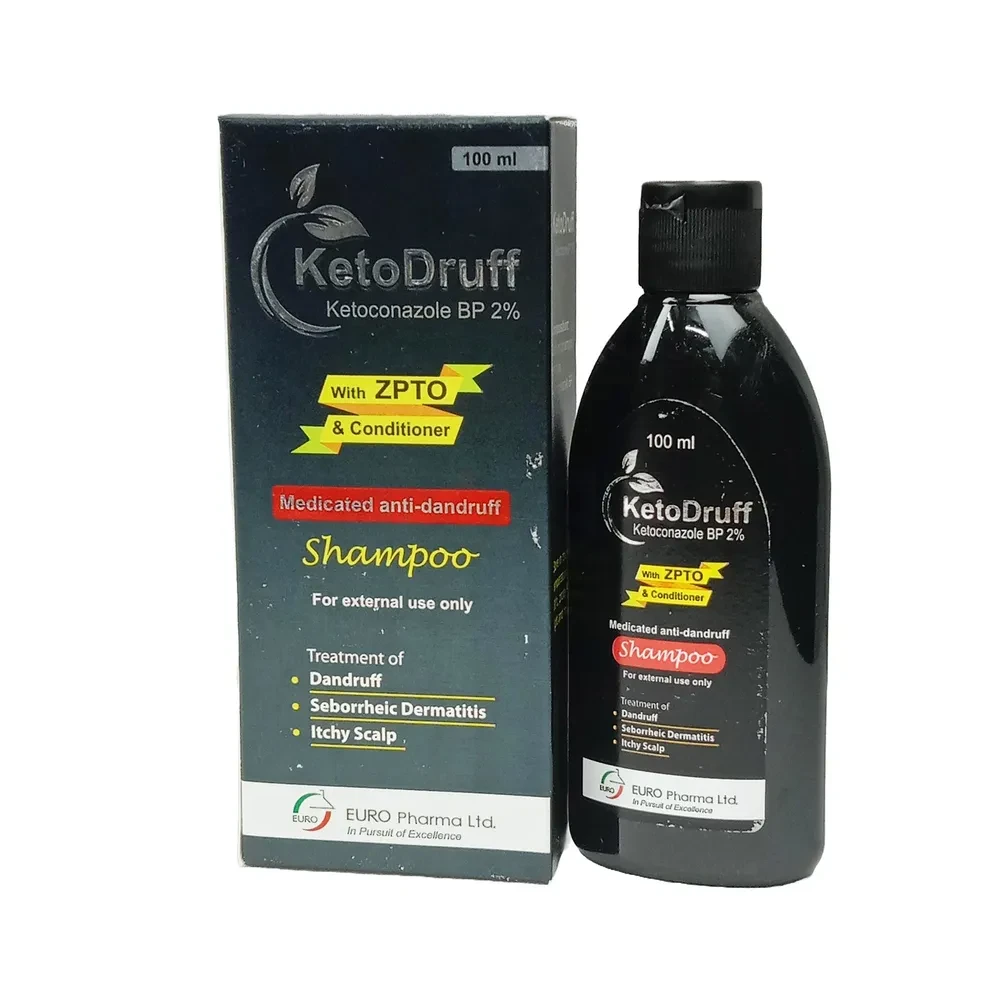
Medicine Overview of Resolve Shampoo 2% Shampoo
Resolve Shampoo belongs to a group of medicines called antifungals. It is used to treat fungal infections of the skin. It works by killing the fungus that causes infections such as athlete’s foot, thrush and ringworm.
Resolve Shampoo should be used in the dose and duration as prescribed by your doctor. This medicine should be used regularly to get the maximum benefit from it. Do not use more than you need, it will not clear your condition faster and may only increase the side effects. Skin infections will usually get better after 2 to 4 weeks. Do not use the medicine for longer than your doctor has told you to and let him or her know if your condition does not improve after 2 to 4 weeks of treatment. If you have Athlete’s foot, wash your socks or tights thoroughly and change your shoes daily if possible.
The most common side effects of using this medicine include a burning sensation and irritation, dryness, peeling or blistering of the skin. Occasionally it can cause thinning of your hair. These are not usually serious, but you should call your doctor if you think you might have a severe allergic reaction. Signs of this include rash, swelling of the lips, throat or face, swallowing or breathing problems. Get emergency help if this happens. Avoid direct contact of the medicine with your eyes. In the case of direct contact, wash your eyes with water and seek immediate medical attention.
It is not likely that other medicines you take by mouth or injection will affect the way this medicine works, but talk to your doctor before using it if you have recently used another medicine that contains a steroid or had an allergic reaction to another antifungal medicine. For pregnant or breastfeeding women, this cream should only be used if it is clearly needed.
- Fungal skin infections
- Application site burning
- Skin peeling
-
KZ Cream helps treat skin infections caused by many different types of fungi.
-
Few healthy tips for Athlete’s Foot:
-
Apply an amount sufficient to cover the affected area and 1 inch of the immediate surrounding skin.
-
Finish the full course of treatment even if you feel better.
-
Avoid getting it in the eyes, nose, or mouth. If accidental exposure occurs, rinse immediately with plenty of water.
-
Inform your doctor if the infection has not cleared up after 4 weeks of treatment.
-
Inform your doctor if you are pregnant, planning pregnancy or breastfeeding.
Seborrheic Dermatitis
Cream: Apply q12hr for 4 weeks or until clear
Shampoo: Apply twice weekly for 4 weeks, with at least 3 days between each shampoo
Tinea Versicolor
Shampoo
Wet hair, massage into scalp for 1 min, and rinse
Repeat, leaving on scalp for 3 additional min
Shampoo twice weekly for 4 weeks, allowing 3 days between each shampoo
Tinea Corporis, Tinea Cruris, Tinea Pedis
Cream: Apply qDay for 2 weeks (6 weeks for tinea pedis), covering affected area
Seborrheic Dermatitis
<12 years: Safety and efficacy not established
>12 years (shampoo): Apply twice weekly for 4 weeks, with at least 3 days between each shampoo
>12 years (cream): Apply to affected area q12hr x4 weeks
In patients who have been on prolonged treatment with topical corticosteroids, it is recommended that the steroid therapy be gradually withdrawn over a period of 2 to 3 weeks, while using Ketoconazole 2% shampoo to prevent any potential rebound effect. Avoid contact with the eyes. If the shampoo enters the eyes, rinse immediately with plenty of water.
Lactation: Not known if distributed into milk; use caution
1-10%
Irritation, severe,Pruritus,Stinging
Frequency Not Defined
Shampoo
Hair loss/alopecia,Irritation,Abnormal hair texture,Scalp pustules,Dry skin,Pruritus,Oiliness/dryness of hair and scalp
Reduced absorption w/ antimuscarinics, antacids, H2-blockers, PPIs, sucralfate. Reduced plasma concentrations w/ rifampicin, isoniazid, efavirenz, nevirapine, phenytoin. May also reduce concentrations of isoniazid and rifampicin. May reduce efficacy of oral contraceptives. May increase serum levels of CYP3A4 substrates e.g. digoxin, oral anticoagulants, sildenafil, tacrolimus.
Potentially Fatal: May potentiate and prolong sedative and hypnotic effects of midazolam and triazolam. Increased plasma levels and prolonged QT intervals of astemizole, cisapride, dofetilide, pimozide, quinidine and terfenadine which may lead to torsade de pointes. Increased risk of myopathy w/ HMG-CoA reductase inhibitors (e.g. lovastatin, simvastatin). Markedly increased plasma levels of nisoldipine. Increased risk of hyperkalaemia and hypotension w/ eplerenone. Increased risk of vasospasm potentially leading to cerebral ischaemia w/ ergot alkaloids (e.g. ergotamine, dihydroergotamine).




Reviews
Clear filtersThere are no reviews yet.