





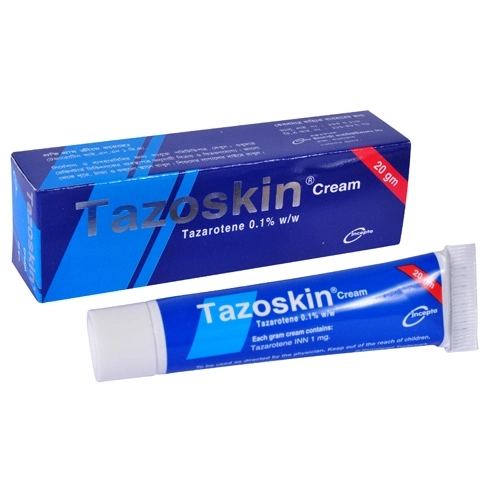
Medicine Overview of Soritene 0.10% Cream
Soritene is a medicine used in the treatment of psoriasis. It works by stopping the overgrowth and thickening of skin cells. Use it only on the affected areas and do not apply on the healthy skin.
Soritene is for external use only. You should always use it exactly as your doctor has told you. The affected area should be clean and dry before application. You must wash your hands thoroughly before and after applying this medicine. This medicine should be used regularly to get the most benefit from it. Do not use more than you need as it will not clear your condition faster and some side effects may be increased. If your condition goes on for longer than four weeks or gets worse at any time, let your doctor know. You can help this medicine work better by keeping the affected areas clean.
Common side effects include itching, skin redness, irritation, dry skin, skin burn, and skin peeling at the site of application. Most of these are temporary and usually resolve with time. Please consult your doctor if these side effects persist for a longer duration. Avoid direct contact of the cream or ointment with your eyes. In case of direct contact, wash your eyes with water and seek immediate medical attention.
Avoid sun exposure and cover the treated areas with clothing or use a sunscreen before stepping out in the sun. Before taking this medicine, you should tell your doctor if you are pregnant, planning pregnancy or breastfeeding as it may lead to birth defects.
- Psoriasis
- Acne
- Dry skin
- Erythema (skin redness)
- Itching
- Skin burn
- Skin irritation
- Skin peeling
-
Soritene should be applied as per dose and duration suggested by the doctor.
-
Finish the full course of treatment even if you feel better.
-
Wash your hands properly before and after applying the medicine.
-
Avoid getting in the eyes, nose, or mouth. If accidental exposure occurs, rinse immediately with plenty of water.
-
Avoid exposing your skin to strong sunlight, use a sunscreen lotion or make sure your skin is protected with clothing.
-
Do not cover the area being treated with airtight dressings such as bandages unless directed by a doctor, as this may increase the risk of side effects.
-
Inform your doctor if the infection has not cleared up after four weeks of treatment.
Topical/Cutaneous
Acne, Stable plaque psoriasis
Apply a thin layer to cleansed dry affected area, once daily in the evening.
Photoaging
Adult: Apply a thin layer to cover entire face (including eyelids) once daily before going to bed.
<12 years: Safety and efficacy not established
>12 years: Apply to affected area once daily in the evening.
Avoid contact with eyes, mouth, mucous membranes. Abraded skin. Avoid exposure to sun or UV light. Do not use >10% of BSA. Do not use cream with occlusive dressing. Wash hands after application. Do not use cream/gel in amounts more than instructed. Women of child bearing potential should take birth control measures. Negative pregnancy test to be obtained within 2 wk prior to initiation and start therapy during normal menstrual period. Retinoid should not be used on eczematous skin, as they may cause severe irritation.
Because of heightened burning susceptibility, exposure to sunlight (including sunlamps) should be avoided unless deemed medically necessary and in such cases, exposure should be minimized during the use of Tazarotene cream. Tazarotene cream should be administered with caution if the patient is also taking drugs known to be photosensitizers (e.g., thiazides, tetracyclines, fluoroquinolones, phenothiazines, sulfonamides) because of the increased possibility of augmented photosensitivity.
>10%
Desquamation,Erythema,Burning/stinging,Dry skin
1-10%
Skin irritation (1% -22%),Skin pain,Pruritis,Irritant or contact dermatitis,Stinging,Acne,Photosensitivity,Rash,Cheilitis
Frequency Not Defined
Worsening of psoriasis,Eczema,Rash,Dry skin,Skin inflammation,Fissuring,Bleeding,Peripheral edema,Hypertriglyceridemia




Reviews
Clear filtersThere are no reviews yet.